 Bird App
Bird of the day
South American tern
Sterna hirundinacea
The South American tern (Sterna hirundinacea) is a species of tern found in coastal regions of southern South America, including the Falkland Islands, ranging north to Peru (Pacific coast) and Brazil (Atlantic coast). It is generally the most common tern in its range. The smaller, highly migratory common tern closely resembles it. The specific epithet refers to the "swallow-like" forked tail feathering.
With adult South American terns reaching a length of 40 to 44 centimetres (16 to 17 in), they are larger than either common terns (Sterna hirundo) or Arctic terns (Sterna paradisaea). Otherwise they closely resemble these species in plumage at all times of year. The beak is larger and is red in adults, and they do not have a dark-coloured bar on the carpus of the wing. The black cap extends below the eye, usually separated from it by a white crescent, and the rear edge of the cap is neatly defined. Juveniles have boldly-barred, dusky, upper parts, and retain their barred tertials into their immature plumage, which differentiates them from common and Arctic tern immatures.
Aliases
Sterna hirundinacea
Range
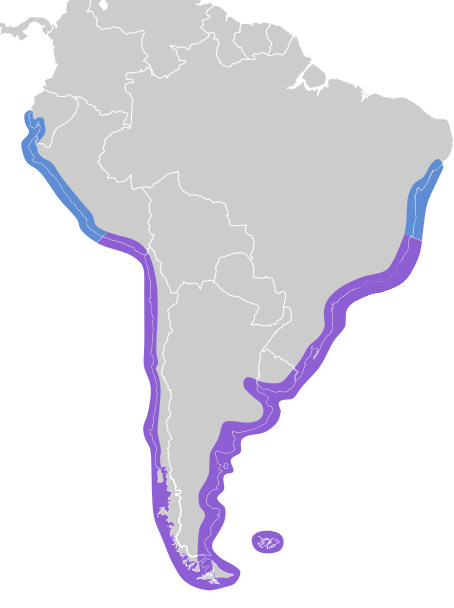
Data retrieved on October 14, 2025 at 8:01 PM