 Bird App
Bird of the day
New Zealand rock wren
Xenicus gilviventris
The New Zealand rock wren (Xenicus gilviventris) is a small New Zealand wren (family Acanthisittidae) endemic to the South Island of New Zealand. Its Māori names include pīwauwau ("little complaining bird"), mātuitui, and tuke ("twitch", after its bobbing motion). Outside New Zealand it is sometimes known as the rockwren to distinguish it from the unrelated rock wren of North America.
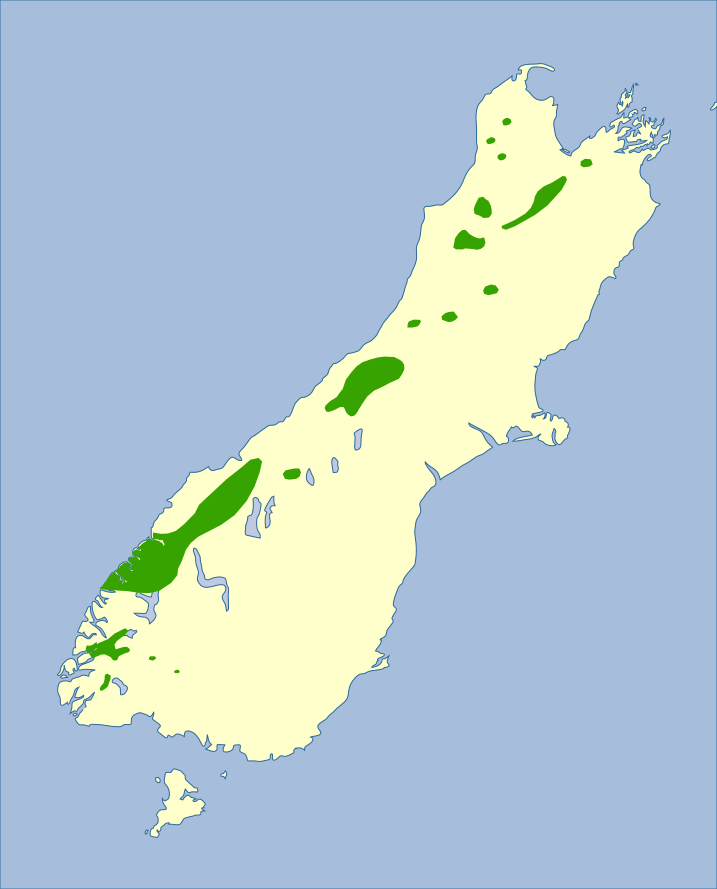
The rock wren is currently restricted to alpine and subalpine areas of the South Island. It is a poor flier and highly terrestrial, feeding in low scrub, open scree, and rockfalls. The rock wren and rifleman are the only two surviving New Zealand wrens; the rock wren's closest relatives were the extinct stout-legged wrens, followed by the extinct bushwren. Its numbers are declining due to predation by introduced mammals.
The rock wren is a very small, almost tailless bird that prefers to hop and run on its long legs, and uses its rounded wings to fly only short distances. It's body length is typically about 9 centimetres (3.5 in). Males weigh around 16 g, females 20 g. Males are greenish with yellow flanks and a pale underside, females tend to be browner, although the degree of difference between the sexes varies geographically.
Aliases
Xenicus gilviventris, Rock wren, Rockwren
Range
Data retrieved on October 14, 2025 at 7:57 PM