 Bird App
Bird of the day
Cactus wren
Campylorhynchus brunneicapillus
The cactus wren (Campylorhynchus brunneicapillus) is a species of wren that is endemic to the deserts of the southwestern United States and northern and central Mexico. It is the state bird of Arizona, and the largest wren in the United States. Its plumage is brown, with black and white spots as markings. It has a distinctive white eyebrow that sweeps to the nape of the neck. The chest is white, whereas the underparts are cinnamon-buff colored. Both sexes appear similar. The tail, as well as flight feathers, are barred in black and white. Their song is a loud raspy chirrup; akin in the description of some ornithologists to the sound of a car engine that will not start. It is well-adapted to its native desert environment, and the birds can meet their water needs from their diet which consists chiefly of insects, but also of some plant matter. The cactus wren is a poor flier and generally forages for food on the ground. Ornithologists generally recognize seven subspecies, with the exact taxonomy under dispute.
Its common name derives from their frequenting desert cactus plants such as the saguaro and cholla, building nests, roosting, and seeking protection from predators among them. Its bulky and globular nests are constructed of plant material and lined with feathers. They do not migrate; instead, they establish and defend the territories around their nests where they live all year-round. It lives in pairs, or as family groups from late spring through winter. Pairing among cactus wrens is monogamous; in each breeding season, the males chiefly build nests, the females incubate eggs, and both parents feed the young.
Populations have declined as the species faces threats related to human activities and habitat loss, although the species remains abundant. Habitat fragmentation and fire have been of particular concern, as the cactus wren is slow to disperse into new habitats. Introduced species have also hurt populations. Feral cats hunt many birds in urban settings, and invasive grasses take up valuable foraging space, reducing habitat size. Despite these threats, the cactus wren has proved adaptable. Cactus wrens have learned to coexist with humans effectively, using human materials and structures for nesting, and even learning to take insects from vehicle radiator grilles. The population still numbers in the millions, leading the International Union for Conservation of Nature to consider the cactus wren a species of least concern.
The cactus wren is the largest wren in the United States. It is between 18 and 19 cm (7.1 and 7.5 in) long, and weighs between 33.4 and 46.9 g (1.18 and 1.65 oz), with an average of 38.9 g (1.37 oz). It has a thick, heavy bill that is dull black, curves slightly downwards, and is about the same length as the head. The lower mandible is grayish and pale, and the tail is long and rounded.
The cactus wren's coloration is brown with white speckles. The crown is chocolate-brown with a light red tinge. A distinctive white supercilium (eyebrow) runs from the bill to the nape of its neck, which is brown with white markings. The chin is white, while the neck has black markings on a mostly white background. Their chest is white with brown or black speckles, and the belly is generally white with some brown or black streaks. The rump and back are gray to brown with white and black streaks. Both the lower underparts and the flanks are cinnamon-buff colored.
The cactus wren's ten primary and nine secondary flight feathers are barred, alternating between black and off-white. Its twelve rectrices are barred, alternating between brownish-black and pale gray-brown. The outer rectrices are white tipped. When flying, a white band can be seen on the underside of the tail feathers. The tail is barred in alternating stripes of black, white, and brown. The legs are brown to pink-brown.
Males and females look alike; juveniles can be distinguished by their paler coloration and red-brown to muddy-gray eyes. Adults have more red-brown to red eyes. Other distinctive features of juveniles include the lack of a white nape streak, and less noticeable black chest markings. Summer often takes a harsh toll on plumage; the intense desert sun and prickly vegetation fade and damage feathers. This wear and tear can make identification of juveniles more difficult. Worn feathers are replaced by molting, which happens in adults from July through October, usually in the bird's own territory. Not all feathers will molt in a single season.
Although the cactus wren looks similar to other wrens in its genus, cactus wren identification is made easier since the habitat of Campylorhynchus wrens does not overlap. A notable difference that can assist in identification of the cactus wren is the white tail band seen in flight. The spotted wren looks similar, but is paler and has fewer markings, and its habitat is in oak woodlands (where cactus wrens do not usually live).
The main call of the cactus wren is a harsh and raspy series of jar-jar-jar, or char, notes, which increase in volume and pitch as the song goes on. Each part of the call lasts around four seconds, with four to eight seconds between calls; calls can carry up to 300 metres (1,000 ft). Cornell University ornithologists described it as sounding "like a car that just won't start". Males are the primary singers, although females can also sing – their song is weaker and higher pitched. Males begin singing before dawn and prefer to vocalize from high vantage points, such as trees, telephone poles, tall cacti, or roofs. At least eight other songs exist besides the main call. A buzz or tek is given as a warning call. Growls serve as a mating and identification call. Rack calls are used for locating an existing mate, or other wrens – this call is often the first vocalization made upon leaving the nest. A high pitched "squeal" is given only during nest building, and is heard rarely. Scri notes are let out during territorial disputes with other wrens. Chicks make various begging vocalizations, including a soft peep. A dzip call is known to be made exclusively by fledglings. The main call is made while the beak is held just slightly above horizontal, and makes the feathers on the bird's throat noticeably extend from their normal position and vibrate.
Aliases
Campylorhynchus brunneicapillus
Range
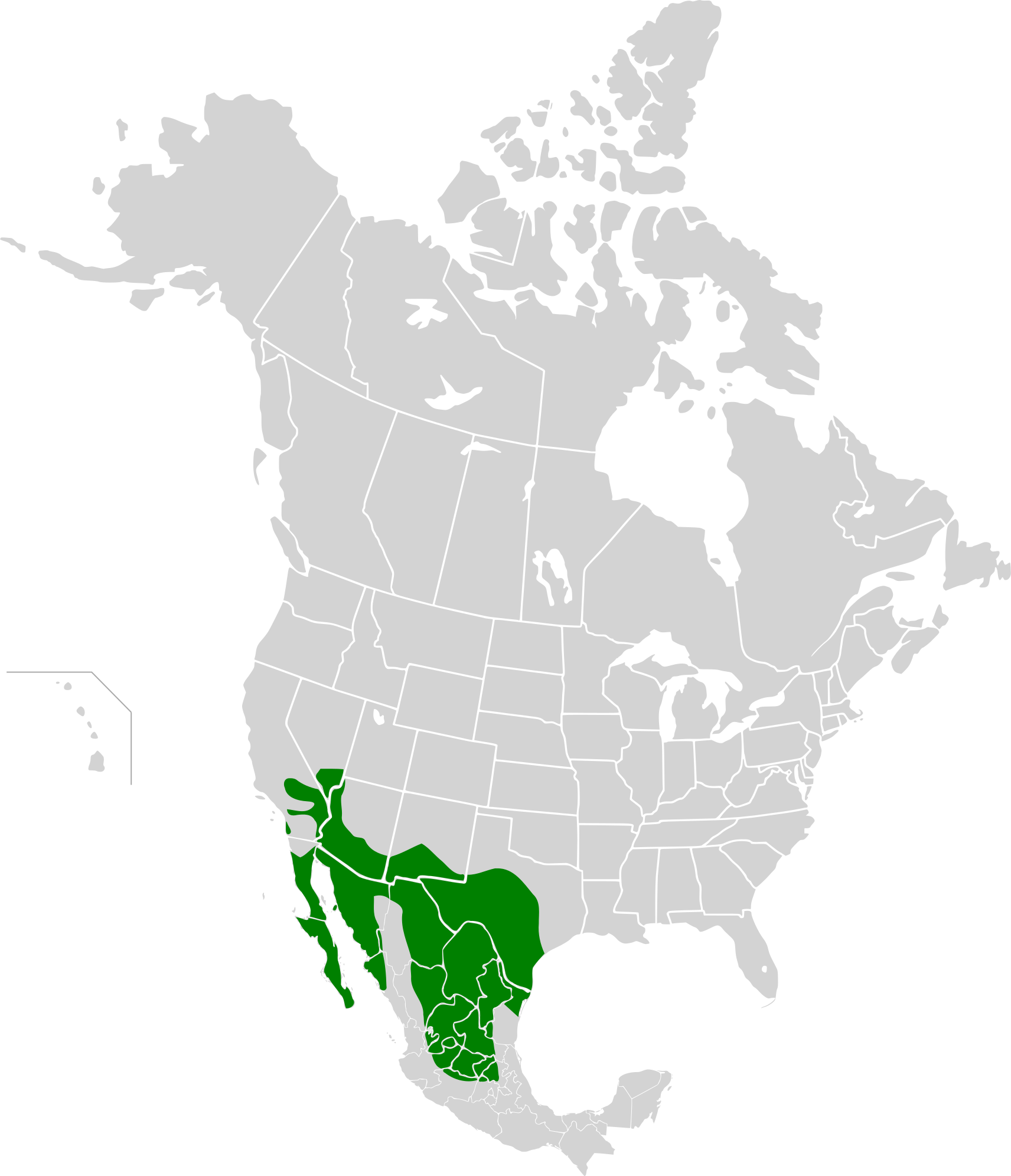
Data retrieved on September 27, 2026 at 3:43 PM