 Bird App
Bird of the day
Plate-billed mountain toucan
Andigena laminirostris
The plate-billed mountain toucan (Andigena laminirostris) is a species of bird in the family Ramphastidae. It is native to the west slope of Ecuador and extreme southern Colombia, where it lives in the high-altitude humid mountain forests of the Andes.
Common names of the species include- laminated hill-toucan, laminated mountain-toucan, and plain-billed mountain-toucan.
Plate-billed Mountain-Toucans have a large laterally compressed bill, the front half of which is black and the back half is mostly red with a raised yellow plate on the upper mandible, a unique feature for which the bird was named. They have a reddish brown iris and a bare ocular area that is yellow below and turquoise green above. The crown and nape are black and the rest of the upper parts are bronzy olive. The side of the neck and underparts are blue gray with a yellow patch on the flanks which is partially covered by the wings. There is a yellow rump patch, and its tail is black with chestnut tips. The crissum (area around the vent) is bright red, and the thighs are brownish maroon.
The plate-billed mountain toucan is about 42 to 53 centimeters (16.5 to 21 inches) in length, with a relatively lightweight bill up to 10 centimeters long. The average male weighs about 314 grams (11.1 ounces) and the female about 303 grams (10.7 ounces). It is zygodactylous, with two toes facing forward and two pointing back.
This is the most vocal of the mountain toucans, and the sexes often duet. The male makes a loud, repeating "tryyyyyyyk" sound and the female makes a drier "t't't't't't't't" noise. The bird utters rattles and clicks loud enough to be heard from over a kilometer away.
Aliases
Andigena laminirostris
Range
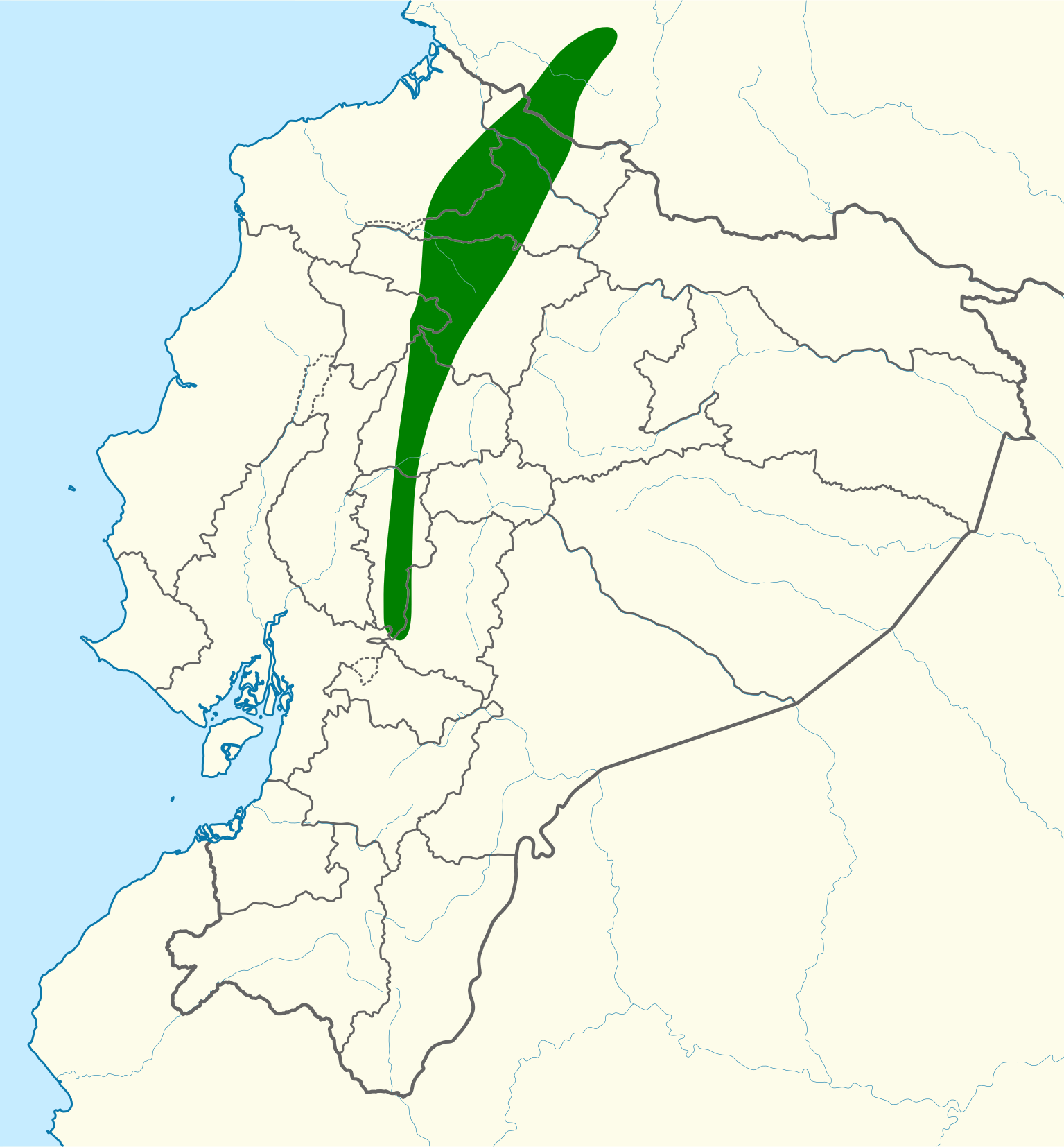
Data retrieved on October 15, 2025 at 7:46 AM