 Bird App
Bird of the day
South Island robin
Petroica australis
The South Island robin (Petroica australis; also known in Māori as the kakaruwai) is a sparrow-sized bird found only in New Zealand, where it has the status of a protected endemic species. The birds are sparsely distributed through the South Island and Stewart Island / Rakiura, although the distribution is not continuous. The nominate, and the Stewart Island robin (P. australis rakiura) are the two subspecies. The species is closely related to the North Island robin (formerly P. australis longipes, now considered a distinct species), and also to the extremely rare black robin (P. traversi) of the Chatham Islands.
The South Island robin is a small passerine, 10–18 cm in length and weighing around 35 g. North Island robins do resemble both females and juveniles of the South Island robins, as well as all the Stewart Island robins, which can sometimes make it difficult to distinguish between the three. The females and juveniles within a particular group of robins look similar to each other, although newly independent juveniles may not yet have the more lightly coloured breast patch. However, male North Island robins are almost black with a white spot just above the beak, as well as the greyish-white lower breast. Females and juveniles are greyer with more variable pale patches on their breasts and throats. Male South Island robins are dark grey, except for the distinct yellowish-white lower chest, while females and juveniles are again lighter grey with a less distinct breast. Finally, Stewart Island robins look similar to North Island robins (both males and females).
New Zealand robins are relatively long-lived; life-spans of at least 14 years have been recorded in the wild.
Aliases
Petroica australis, New Zealand robin
Range
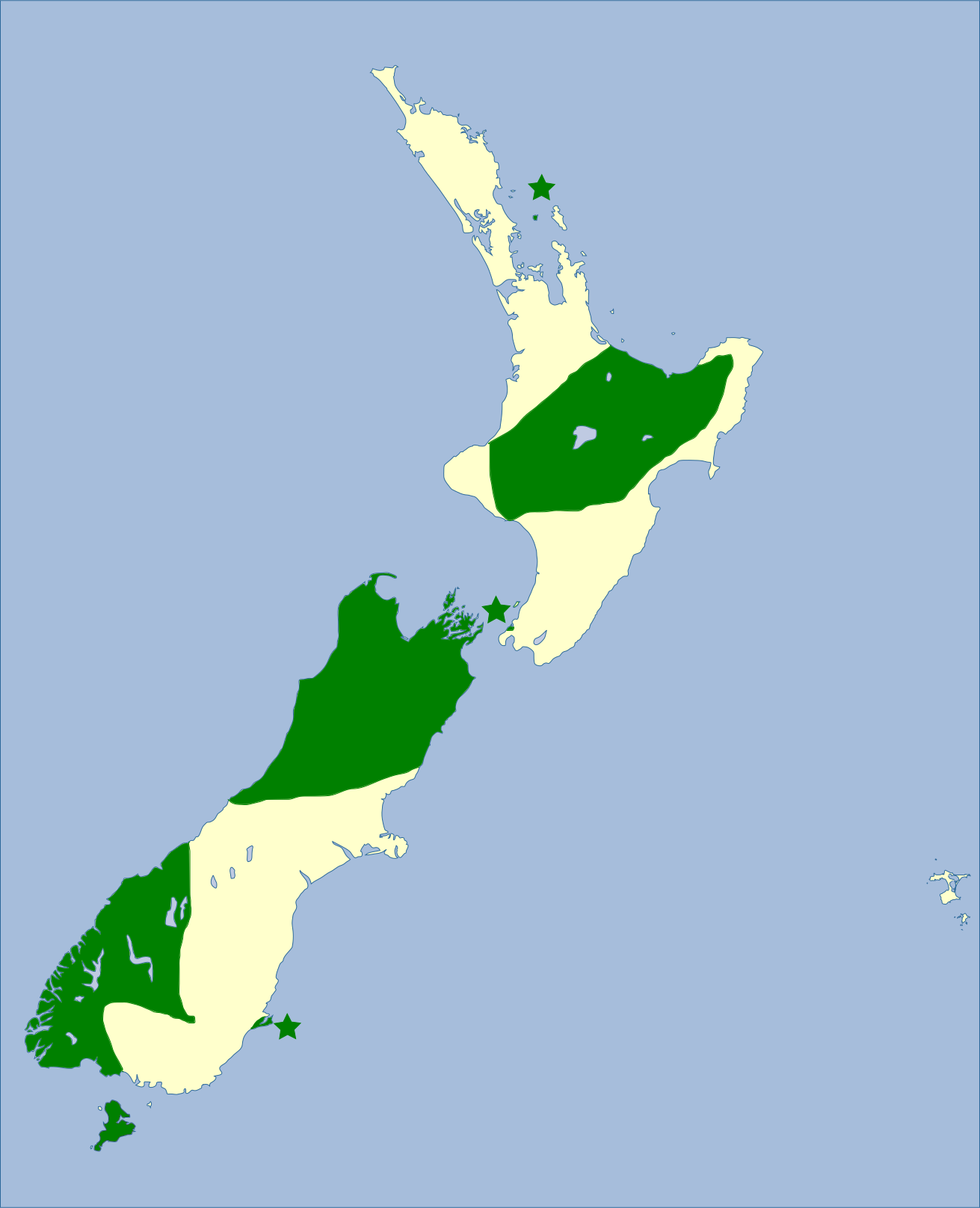
Data retrieved on October 15, 2025 at 7:43 AM