 Bird App
Bird of the day
Purple-crowned fairywren
Malurus coronatus
The purple-crowned fairywren (Malurus coronatus) is a species of bird in the Australasian wren family, Maluridae. It is the largest of the eleven species in the genus Malurus and is endemic to northern Australia. The species name is derived from the Latin word cǒrōna meaning "crown", owing to the distinctive purple circle of crown feathers sported by breeding males. Genetic evidence shows that the purple-crowned fairywren is most closely related to the superb fairywren and splendid fairywren. Purple-crowned fairywrens can be distinguished from other fairywrens in northern Australia by the presence of cheek patches (either black in males or reddish-chocolate in females) and the deep blue colour of their perky tails.
Like other fairywrens, the purple-crowned fairywren is socially monogamous. However, unlike other species in the genus, it is not sexually promiscuous and shows low rates of extra-pair paternity. However, females with related males as partners will mate with other individuals. This is thought to be an adaptation to avoid inbreeding depression. They build small dome-shaped nests in which 2–3 eggs are laid, with up to three clutches per year. It is mainly insectivorous, feeding on a wide variety of invertebrates, and supplements its diet with seeds.
The purple-crowned fairywren inhabits riparian habitat with dense vegetation, such as well-developed midstoreys composed of dense shrubs or tall, dense thickets of river grass. Unlike the related superb fairywren, it has not adapted to urbanised habitats very well and has suffered severe population loss in some areas. While the species overall is considered of least-concern for conservation, its western subspecies is listed as endangered. Livestock grazing, fires, and invasive species are chief concerns for the population. The Australian government and conservation groups have active conservation interventions for the species, including for fire and invasive species management.
The purple-crowned fairywren is a small, sexually dimorphic, bird measuring approximately 14 cm (5.5 in) in length, with a wing-span of approximately 16 cm (6.3 in) and weighing only 9–13 g (0.32–0.46 oz). It can be differentiated from other North Australian fairywrens by the presence of cheeks patches and the deep blue color of their tails. The plumage is brown overall, with the wings more greyish brown and the belly cream-buff. The blue tail is long and upright, and all except the central pair of feathers are broadly tipped with white. Their bill is black and the legs and feet are brownish grey. Although there is a slight geographical variation between the two subspecies, only the difference in colour of mantle is noticeable in the field. The crown and nape of M. c. macgillivrayi is slightly bluer, and its mantle and upper back has weak blue-grey shading, whereas the slightly larger M. c. coronatus has a browner back, as well as a buff-coloured, rather than white, breast and belly.
During the breeding season, adult males develop the spectacular bright purple feathers on their crown. This is bordered by a black face mask and capped with an oblong black spot on top of the head. During the non-breeding season, the male's colourful crown is replaced by grey/brown feathers and its black mask with black cheek patches and an off-white to pale grey orbital ring. The adult female differs in having a blue-tinged grey crown, chestnut ear-coverts, and a greenish blue tail. Immature birds are very similar to adult females except for a duller coloration, a brown crown, and longer tail, though male birds start to show black feathers on the face by six to nine months
Within a group, males who are breeding molt into their bright crown earlier than their non-breeding subordinates, and do so even sooner after heavy rains the preceding season. Experiments have demonstrated that breeding males view more colourful plumage among nearby males as a source of competition, and behave more aggressively towards them.
The song of the purple-crowned fairywren is distinct from that of other fairywrens – it is of lower pitch, and quite loud. Breeding pairs use song to communicate and use duets to ward off itinerant fairywrens from their territory. Three calls have been recorded: a loud reel cheepa-cheepa-cheepa, a quieter chet – a contact call between birds in a group when foraging, and an alarm call – a harsh zit.
Aliases
Malurus coronatus, M. coronatus
Range
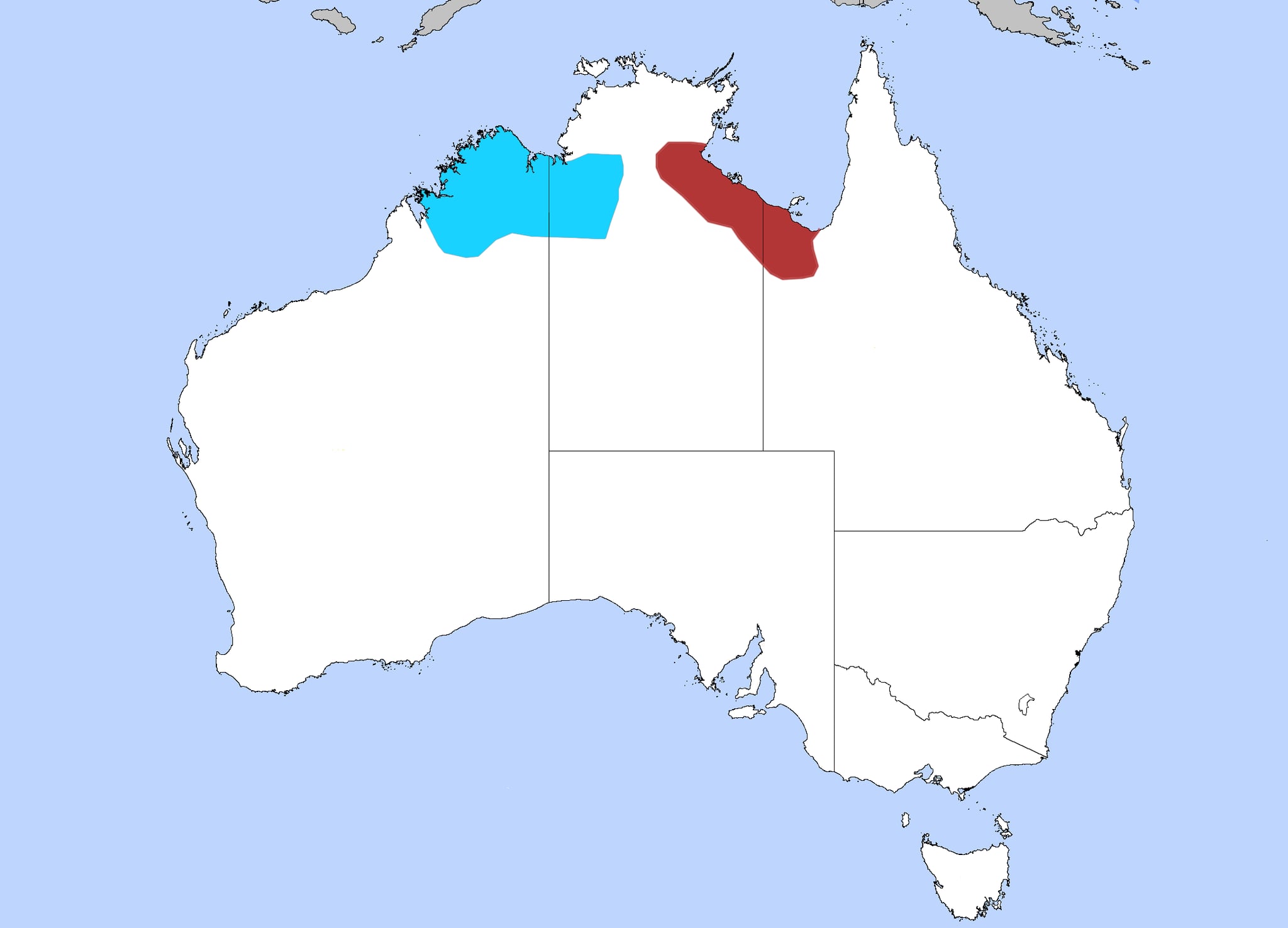
Data retrieved on October 15, 2025 at 7:34 AM