Bird App
Bird of the day
Bonaparte's gull
Chroicocephalus philadelphia
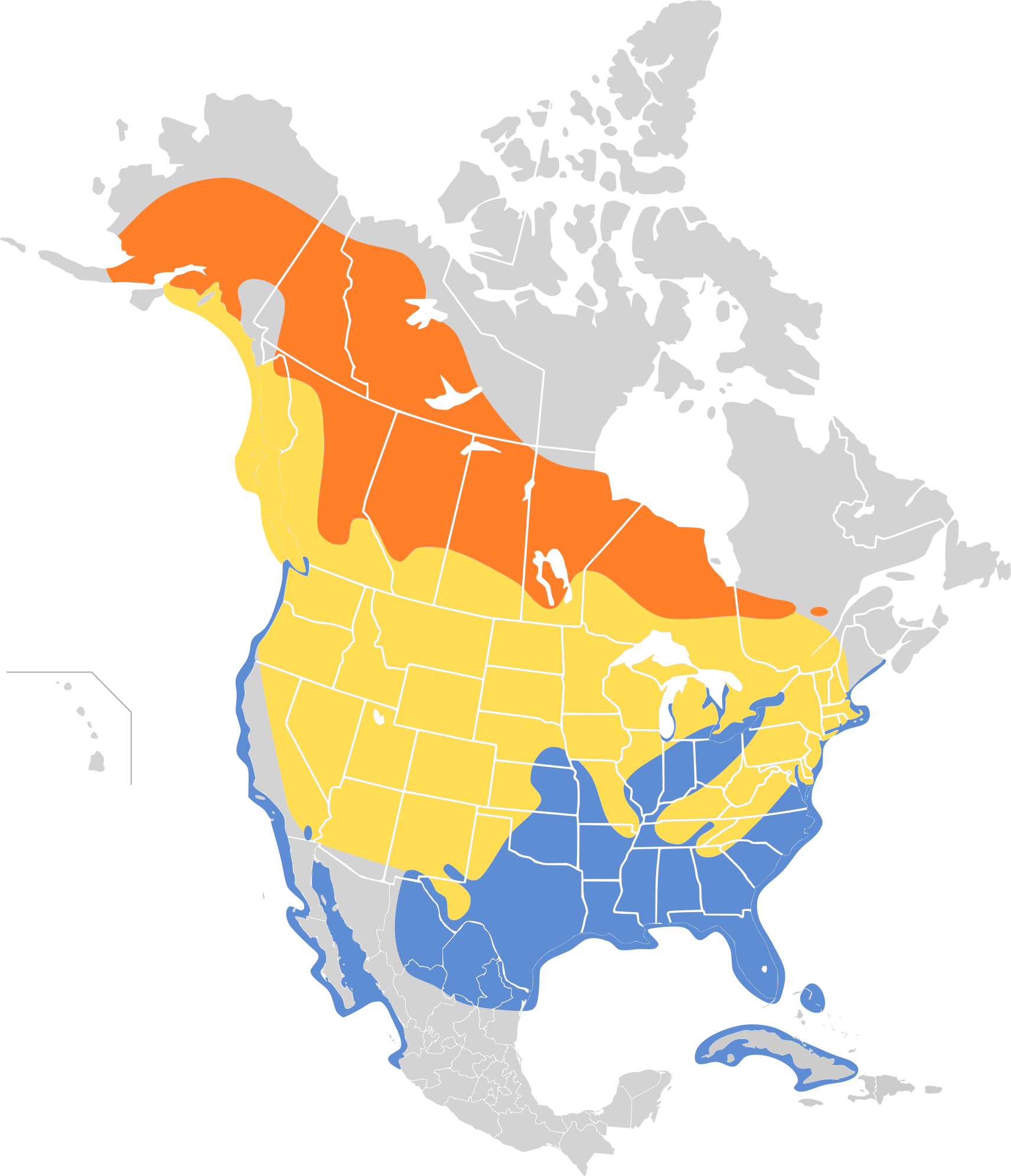
Bonaparte's gull (Chroicocephalus philadelphia) is a member of the gull family Laridae found mainly in northern North America. At 28 to 38 cm (11 to 15 in) in length, it is one of the smallest species of gull. Its plumage is mainly white with grey upperparts. During breeding season, Bonaparte's gull gains a slaty-black hood. The sexes are similar in appearance.
Bonaparte's gull is among the smallest of the gull species; only little gull and Saunders's gull are smaller. Adults range from 28 to 38 cm (11 to 15 in) in length, with a wingspan of 76–84 cm (30–33 in) and a weight of 180–225 g (6.3–7.9 oz). There is no difference in plumage or bare part colour between the sexes, though males tend to be heavier than females. Bonaparte's gull is smaller-bodied, smaller-headed, and smaller-billed than the other common hooded gulls of North America. The adult has grey upperparts and white underparts, with, unlike other Chroicocephalus gulls, the grey extending up the rear of the neck to just below the head; its wingtips are black and white striped above with the outer four primary feathers white with a black tip, and the other primary feathers grey with a black tip; the whole wing is very pale below. In breeding plumage, it has a slaty black hood, which it loses in non-breeding plumage. Its short, thin bill is black, and its legs are pinkish-red in winter, orangish-red in summer.
The juvenile plumage, usually only seen on the breeding grounds, is scalloped brown on the back, and patchy brown on the head; they moult into first-winter plumage in August mostly before migrating south. First year birds are more like the adults with a grey back, but retain a brown bar across the forewing, blackish tips to the secondary feathers, and a black tip to the tail; they have the same plumage in winter and the following summer, but the summer plumage is paler due to wear and fading. Fewer than 5 percent of Bonaparte's gulls acquire a dark hood in their first summer, and on those that do, the hood is duller than on breeding adults. Two-year old birds mostly gain full adult plumage, but a few retain signs of immaturity such as brown spots on the forewing and dark tips to some of the tail feathers.
The most similar potential confusion species is the Old World black-headed gull, which each being a regular, though scarce or rare, winter visitor within the wintering range of the other. They can best be distinguished by the smaller size of Bonaparte's gull, its slenderer, darker bill, pale grey rear of the neck, pinker legs, and in flight, by the conspicuously whiter underwing, lacking the dark uderside of the primary feathers of black-headed gull. Little gull can also be confused in immature plumages; it is even smaller than Bonaparte's gull, and the dark bar on the forewing of year-old birds is black, not dark brown. Adult little gulls, with their uniform pale grey upperwing and blackish underwing, are far less likely to be confused.
Aliases
Chroicocephalus philadelphia
Range