Bird App
Bird of the day
Boat-billed heron
Cochlearius cochlearius
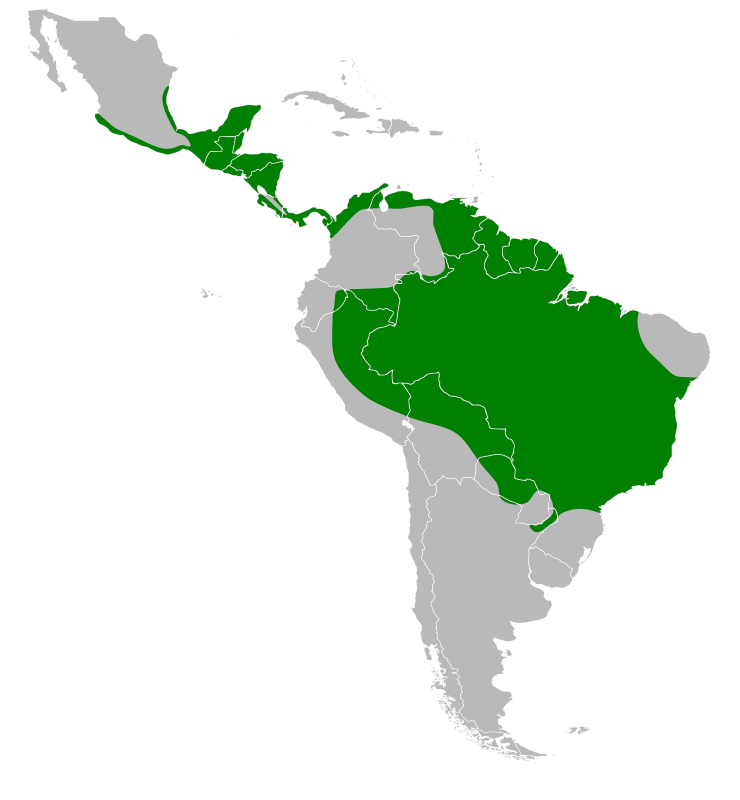
The boat-billed heron (Cochlearius cochlearius), colloquially known as the boatbill, is an atypical member of the heron family. It is the only member of the genus Cochlearius and was formerly placed in a monotypic family, the Cochleariidae. It lives in mangrove swamps from Mexico south to Peru and Brazil. It is a nocturnal bird, and breeds semicolonially in mangrove trees, laying two to four bluish-white eggs in a twig nest.
The boat-billed heron grows to about 54 cm (21 in) long. Adults are pale grey to white in color, with chestnut-colored abdomens and black flanks. The massive, broad, scoop-like bill, which gives rise to this species' name, is mainly black. This bird is also adorned with a crest which is thought to be used in mate attraction as it is larger in males. The sexes are similar in appearance, the main differences being that females are slightly smaller, grayer in appearance, and have shorter crests than males. Newly hatched nestlings have green-yellow skin, with their upperparts covered in gray down feathers. Their upper bill is black and they have green-yellow legs. Juveniles are darker in color than adults and lack a crest.
Aliases
Cochlearius cochlearius
Range