Bird App
Bird of the day
Black-winged kite
Elanus caeruleus
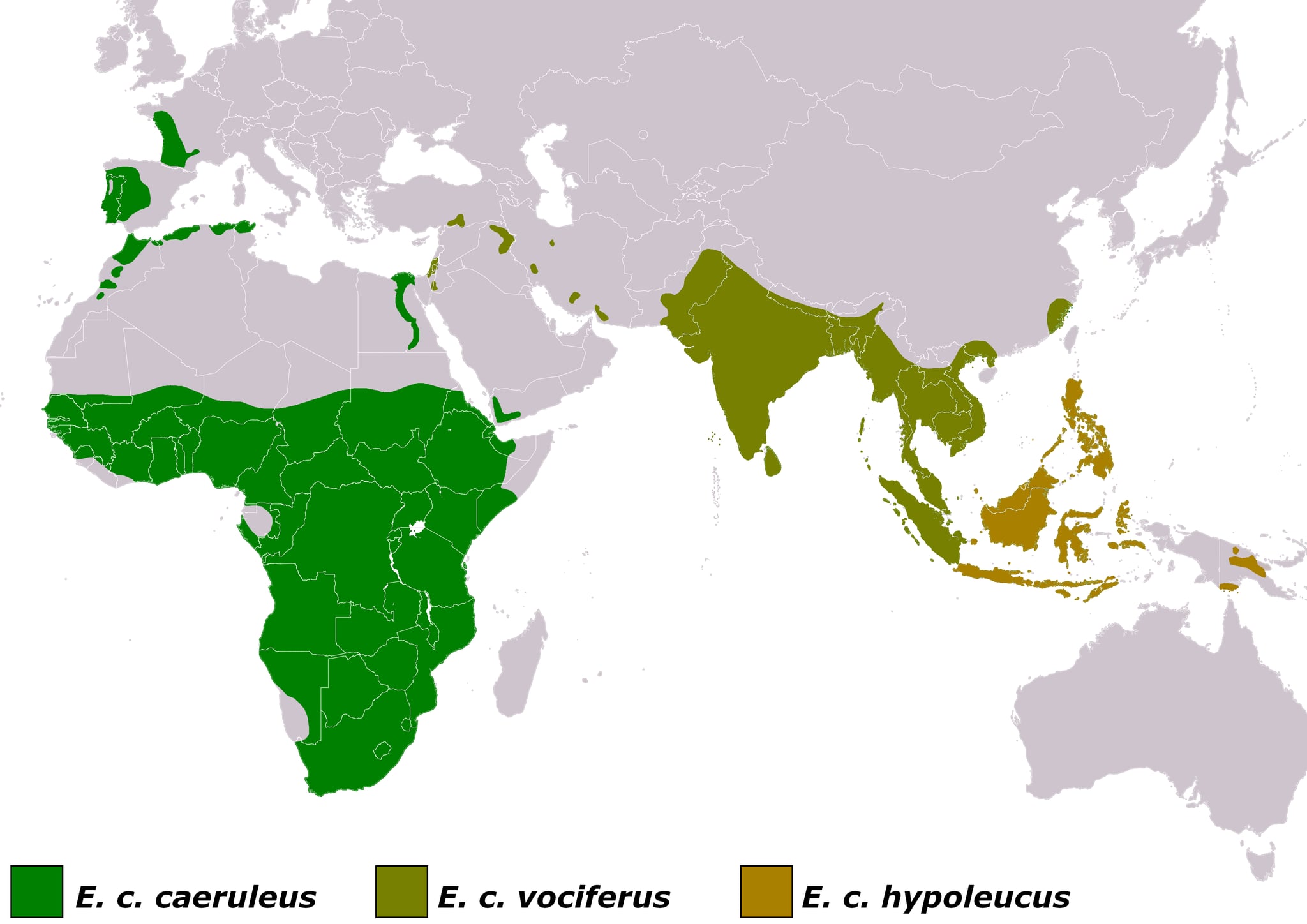
The black-winged kite (Elanus caeruleus), also known as the black-shouldered kite (not to be confused with the closely related Australian species of the same name), is a small diurnal bird of prey in the family Accipitridae best known for its habit of hovering over open grasslands in the manner of the much smaller kestrels. This Palearctic and Afrotropical species was sometimes combined with the Australian black-shouldered kite (Elanus axillaris) and the white-tailed kite (Elanus leucurus) of North and South America which together form a superspecies. This kite is distinctive, with long wings; white, grey and black plumage; and owl-like forward-facing eyes with red irises. The owl-like behaviour is even more pronounced in the letter-winged kite (Elanus scriptus), a nocturnal relative in Australia. Although mainly seen on plains, they are sometimes seen on grassy slopes of hills in the higher elevation regions of Asia. They are not migratory, but show nomadism in response to weather and food availability. They are well adapted to utilize periodic upsurges in rodent populations and can raise multiple broods in a single year unlike most birds of prey. Populations in southern Europe have grown in response to human activities, particularly agriculture and livestock rearing. Now present in SouthWest France
This long-winged raptor is predominantly grey or white with black shoulder patches, wing tips and eye stripe. The long falcon-like wings extend beyond the tail when the bird is perched. In flight, the short and square tail is visible and it is not forked as in the typical kites of the genus Milvus. When perched, often on roadside wires, it often adjusts its wings and jerks its tail up and down as if to balance itself. The sexes are alike in plumage. Their large forward-facing eyes placed under a bony shelf that shades them is distinctive; their velvety plumage and zygodactyl feet are characters shared with owls and the genus has been considered as a basal group within the Accipitridae. They are thought to have been adapted for living in savanna habitats where seasonal rodent population peaks occur. Such food resources are also favoured by the owls. The inner vanes of the feathers have velvety barbules. They have a diploid chromosome number of 68 (some older studies claimed 64 for E.c.caeruleus and 66 for E.c.vociferus) with a distinct karyotype with resemblances to the kites and honey buzzards and suggesting a basal position within the diurnal birds of prey.
Aliases
Elanus caeruleus
Range