 Bird App
Bird of the day
Lucy's warbler
Leiothlypis luciae
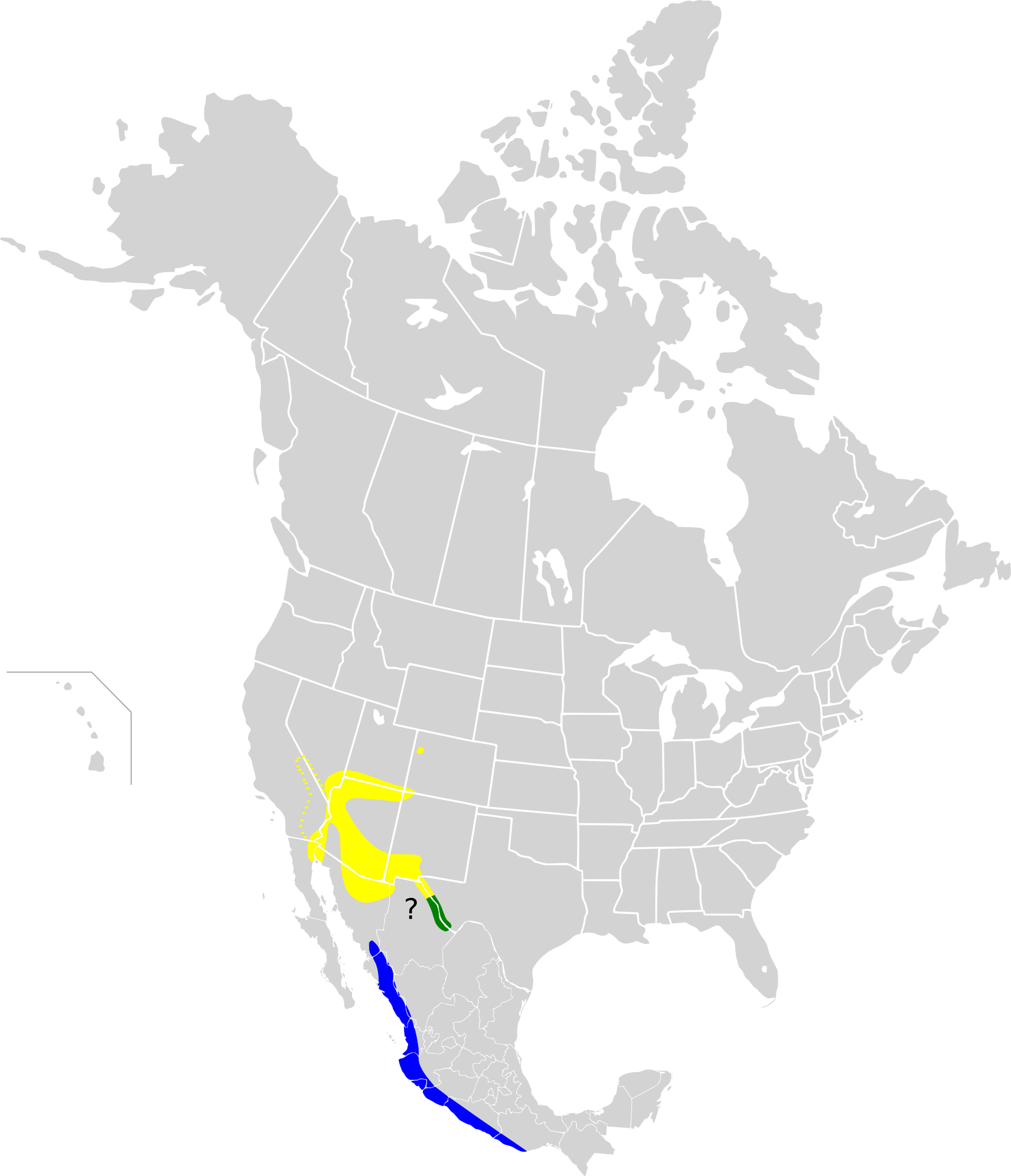
Lucy's warbler (Leiothlypis luciae) is a small New World warbler found in North America. This species ranges includes southwestern United States and northwestern Mexico. It is one of only two warblers to nest in cavities.
Lucy's warbler is the smallest species of New World warbler. It measures from 9 to 12 cm (3.5 to 4.7 in) in length and can weigh from 5.1 to 7.9 g (0.18 to 0.28 oz), thus being slightly smaller even than the warblers formerly placed in the genus Parula. Among standard measurements, the wing chord is 49 to 61 mm (1.9 to 2.4 in), the tail is 33 to 41 mm (1.3 to 1.6 in), the bill is 7.8 to 9 mm (0.31 to 0.35 in) and the tarsus is 15 to 17.5 mm (0.59 to 0.69 in).
It is rather undistinguished compared to other wood-warblers, being perhaps the palest species in its family. Its head and upperparts are pale gray, while the underparts are whitish. It has a white eyering and a small, pointed bill. Both genders have a rufous rump, a diagnostic field mark. Adult males also have a small rusty patch on their crown. Juveniles are paler, with a tawny rump and buffy wingbars.
Lucy's warbler is closely related to Virginia's warbler, Nashville warbler and Colima warbler. The common name and binomial of this species commemorate Lucy Hunter Baird, daughter of ornithologist Spencer Fullerton Baird.
Lucy's warblers inhabit riparian mesquite and brushy country of the southwestern United States and northwestern Mexico. It can nest in the driest vegetated stretches of the Sonora Desert and nest in possibly the driest habitats of any New World warbler.
Aliases
Leiothlypis luciae
Range
Data retrieved on October 15, 2025 at 5:34 AM