Bird App
Bird of the day
Regent honeyeater
Anthochaera phrygia
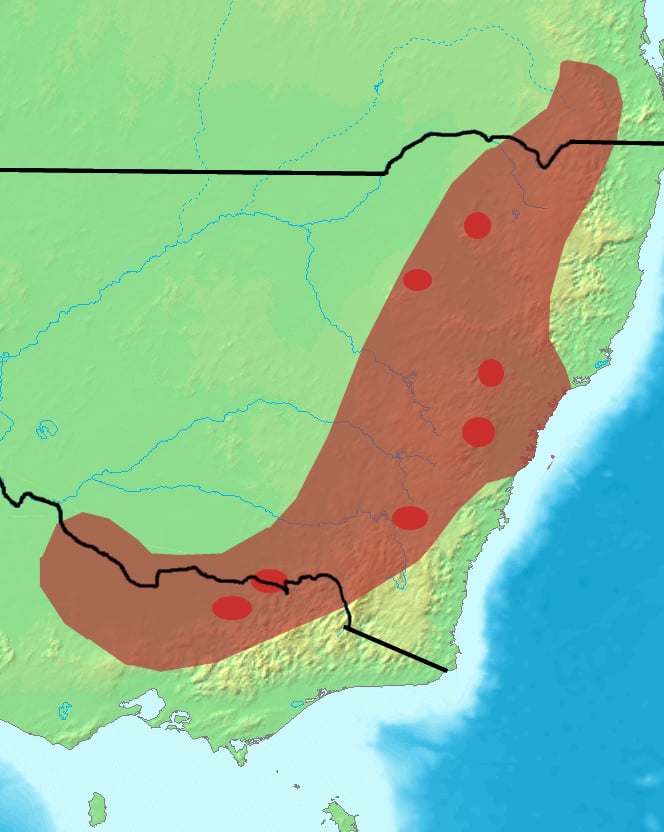
The regent honeyeater (Anthochaera phrygia) is a critically endangered bird endemic to southeastern Australia. It is commonly considered a flagship species within its range, with the efforts going into its conservation having positive effects on many other species that share its habitat. Recent genetic research suggests it is closely related to the wattlebirds.
The neck and head are glossy black. The breast is covered with contrasting pale yellow speckles, and the feathers in the tail and wings are black and bright yellow.
It feeds primarily on nectar from eucalyptus and mistletoe species, and to a lesser extent on insects and their honeydew. It also feeds on both native and cultivated fruit.
Breeding mostly occurs from August to January, during the southern spring and summer. The breeding season appears to correspond with the flowering of key eucalyptus and mistletoe species. Two or three eggs are laid in a cup-shaped nest. Nest success, and productivity of successful nests, has been found to be low in this species, with nest surveillance revealing high predation by a range of bird and arboreal mammal species. There is also a male bias to the adult sex ratio, with an estimated 1.18 males per female.
Aliases
Anthochaera phrygia
Range