Bird App
Bird of the day
Orange-fronted plushcrown
Metopothrix aurantiaca
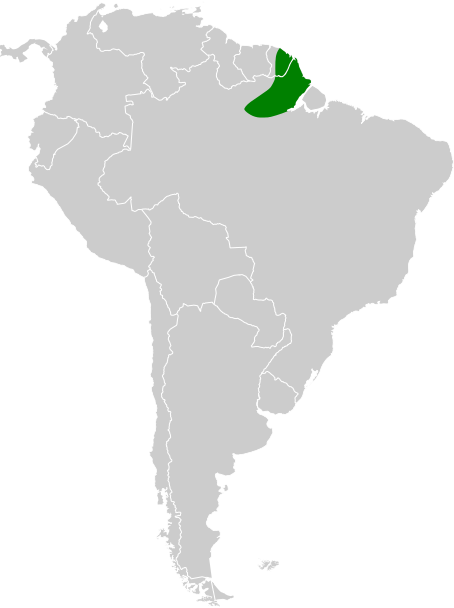
The orange-fronted plushcrown (Metopothrix aurantiaca) is a species of bird in the Furnariinae subfamily of the ovenbird family Furnariidae. It is found in Bolivia, Brazil, Colombia, Ecuador, and Peru.
The orange-fronted plushcrown is 11 to 12 cm (4.3 to 4.7 in) long and weighs 10 to 12 g (0.35 to 0.42 oz). The sexes have the same plumage. Adults have an orange forehead ("front") and yellow lores, eyering, and supercilium; the last becomes greenish yellow behind the eye. They have a faint greenish olive line through the eye and greenish olive ear coverts. Their crown, back, rump, and tail are greenish olive, with the rump being somewhat paler. The "plush" of the crown is usually not apparent in the field. Their wings are dark olive fuscous with pale yellow edges on the coverts and flight feathers. Their throat is yellow and the rest of their underparts are dull yellowish green that is slightly paler on the belly. Their iris is brown to dark brown to gray, their maxilla black, their mandible black to gray, and their legs and feet bright yellow-orange to yellow. Juveniles have little or no orange and yellow on their face. It is the only species of furnariid with yellow/greenish plumage and yellow legs, in which it resembles a tanager or warbler.
Aliases
Metopothrix aurantiaca
Range