Bird App
Bird of the day
West Indian whistling duck
Dendrocygna arborea
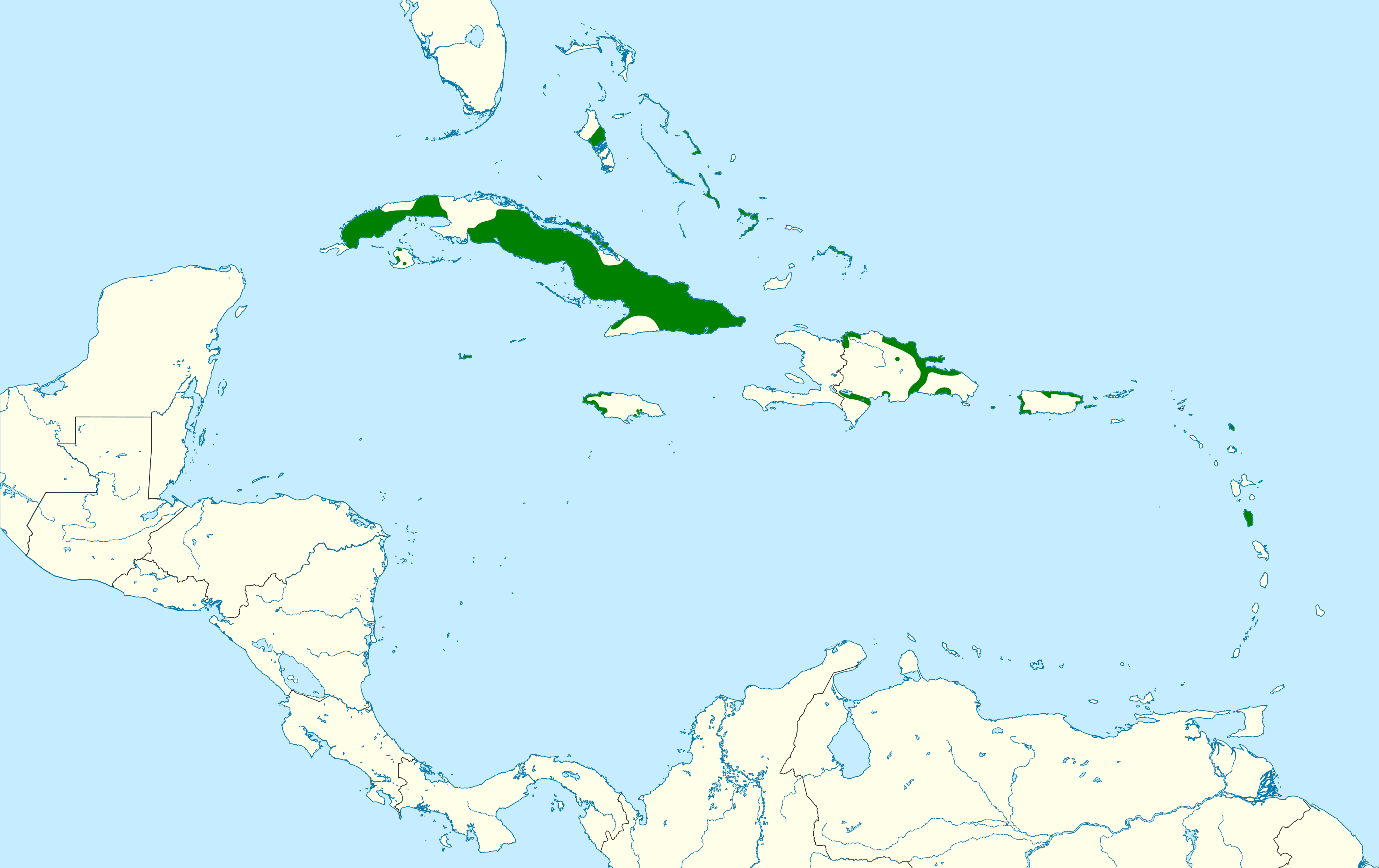
The West Indian whistling duck (Dendrocygna arborea) is a whistling duck that breeds in the Caribbean. Alternative names are black-billed whistling duck and Cuban whistling duck.
The West Indian whistling duck is the largest and darkest of the whistling ducks with a length of 48 to 58 cm (19 to 23 in). The female weighs from 800 to 1,320 g (1.76 to 2.91 lb) and the male weighs from 760 to 1,240 g (1.68 to 2.73 lb); this species is about the size of a mallard. It has a long black bill, long head and longish legs. It has a pale foreneck and light brown face. The crown, back, breast and wings are dark brown to black, and the rest of the underparts are white with heavy black markings.
All plumages are similar, except that juveniles are duller and have a less contrasted belly pattern.
Aliases
Dendrocygna arborea, West Indian whistling-duck
Range