Bird App
Bird of the day
Greater kestrel
Falco rupicoloides
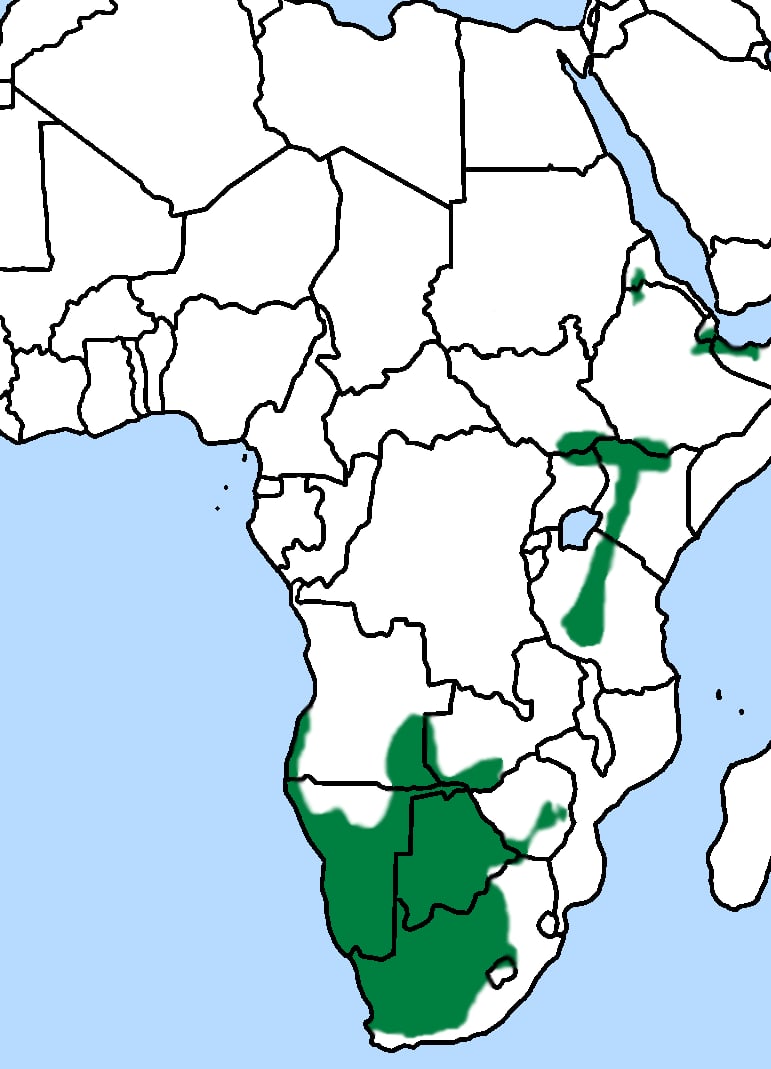
The greater kestrel (Falco rupicoloides) or white-eyed kestrel is a bird of prey belonging to the falcon family Falconidae. It is one of the largest kestrels and is found in open country in southern and eastern Africa.
The plumage of the adult is mainly pale rufous, both above and below. The back, upperwing and flanks are barred with black. The breast has dark streaks and the head is streaked but has no malar stripe unlike the common and lesser kestrels. The rump and tail are grey with black bars; the tail has a white tip. In flight, the whitish underwing contrasts with the darker body. The iris of the eye is whitish, distinguishing the bird from any similar species. The bill is mainly blue-grey and the feet and cere are yellow. Juvenile birds have rufous instead of grey on the tail, streaked flanks and a dark eye.
The bird is 29–37 cm (11–15 in) long with a wingspan of 68–84 cm (27–33 in) The southern subspecies F. r. rupicoloides weighs about 181–334gr (.400–.736 lb). The form F. r. arthuri is smaller, weighing about 165–252gr (.364–.556 lb). The northern subspecies F. r. fieldi is also small and is paler than the others.
The species is usually silent but has a shrill, repeated call.
Aliases
Falco rupicoloides
Range