 Bird App
Bird of the day
Double-toothed kite
Harpagus bidentatus
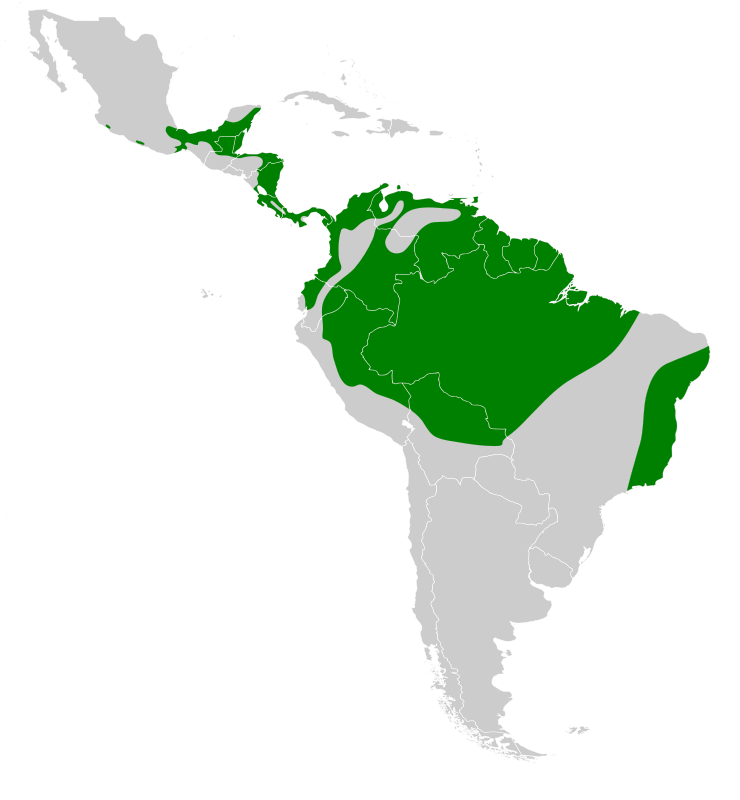
The double-toothed kite (Harpagus bidentatus) is a species of bird of prey in subfamily Accipitrinae, the "true" hawks, of family Accipitridae. It is found from central Mexico through Central America into much of northern and eastern South America.
The double-toothed kite is 29 to 35 cm (11 to 14 in) long with a wingspan of 60 to 72 cm (24 to 28 in). Males weigh about 160 to 200 g (5.6 to 7.1 oz) and females about 190 to 230 g (6.7 to 8.1 oz). The species gets its English name from the tooth-like notches on the edge of its maxilla. Males and females have similar plumage though the females' colors are richer. Adults of both subspecies have a dark gray head with a white throat that has a dark stripe down its center. Their upperparts are a somewhat lighter gray and their tail blackish with three grayish bands and a gray tip. Their eyes are red, their cere greenish yellow, and their legs and feet yellow. The nominate subspecies has a rufous breast, a rufous belly with gray and whitish barring that sometimes extends into the lower breast, and white undertail coverts. Adults of subspecies H. b. fasciatus have similar underparts to the nominate but the rufous is paler and less extensive and the barring heavier and more extensive. Immatures of both subspecies have deep brown upperparts and whitish to buff underparts with bold vertical brown streaks.
Aliases
Harpagus bidentatus
Range
Data retrieved on September 27, 2026 at 4:00 PM