 Bird App
Bird of the day
Little ringed plover
Charadrius dubius
The little ringed plover (Charadrius dubius) is a small plover native to the Old World. It has mostly brown upperparts, a black neckband and a black mask around the eye with a noticeable yellow eyering. Its forehead, belly and the rest of the breast are white. A migratory species, it breeds in open gravel areas near freshwater, including gravel pits, islands and river edges. Its diet consists mainly of insects and worms, which it forages for in muddy areas.
Adult little ringed plovers have a grey-brown back and wings, a white belly and a white breast with one black neckband. They have a brown cap, a white forehead, a black mask around the eyes with white above and a short dark bill. The legs are flesh-coloured and the toes are all webbed.
This species differs from the larger common ringed plover (Charadrius hiaticula) in the head pattern, leg colour, and the presence of a clear yellow eye-ring.
Aliases
Charadrius dubius
Range
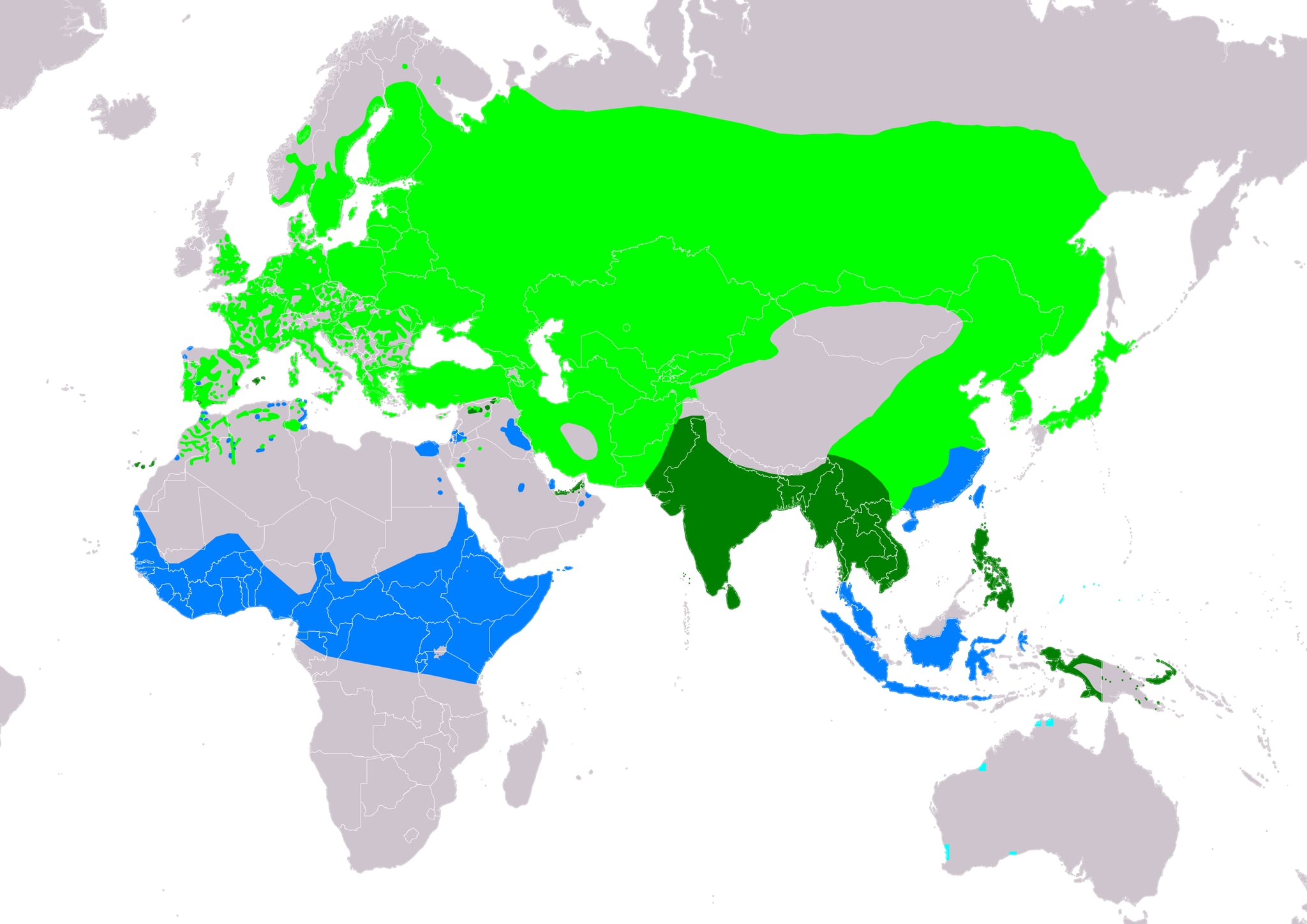
Data retrieved on October 14, 2025 at 8:23 PM