 Bird App
Bird of the day
Bananaquit
Coereba flaveola
The bananaquit (Coereba flaveola) is a species of passerine bird in the tanager family Thraupidae. Before the development of molecular genetics in the 21st century, its relationship to other species was uncertain, and it was placed with the buntings and New World sparrows in the family Emberizidae, with New World warblers in the family Parulidae, or its own monotypic family, Coerebidae. This small, active nectarivore is found in warmer parts of the Americas and is generally common.
Its name derives from its yellow color and the English word quit, which refers to small passerines of tropical America; cf. grassquit, orangequit.
The bananaquit is a small bird, although size varies somewhat across the subspecies. Length can range from 10 to 13 cm (3.9 to 5.1 in). Weight ranges from 5.5 to 19 g (0.19 to 0.67 oz).
Most subspecies of the bananaquit have dark grey (almost black) upperparts, black crowns and sides of the head, a prominent white eyestripe, grey throat, white vent, and yellow chest, belly, and rump. Coloration is heavily influenced by melanocortin 1 receptor variation.
The sexes are alike, but juveniles are duller and often have partially yellow eyebrows and throat.
In the subspecies bahamensis and caboti from the Bahamas and Cozumel, respectively, the throat and upper chest are white or very pale grey, while ferryi from La Tortuga Island has a white forehead. The subspecies laurae, lowii, and melanornis from small islands off the coast of northern Venezuela are overall blackish, while the subspecies aterrima and atrata from Grenada and Saint Vincent have two plumage morphs, one "normal" and another blackish. The pink gape is usually very prominent in the subspecies from islands in the Caribbean Sea.
The tongue is paddle-shaped, with an extremely long paddle section.
Aliases
Coereba flaveola
Range
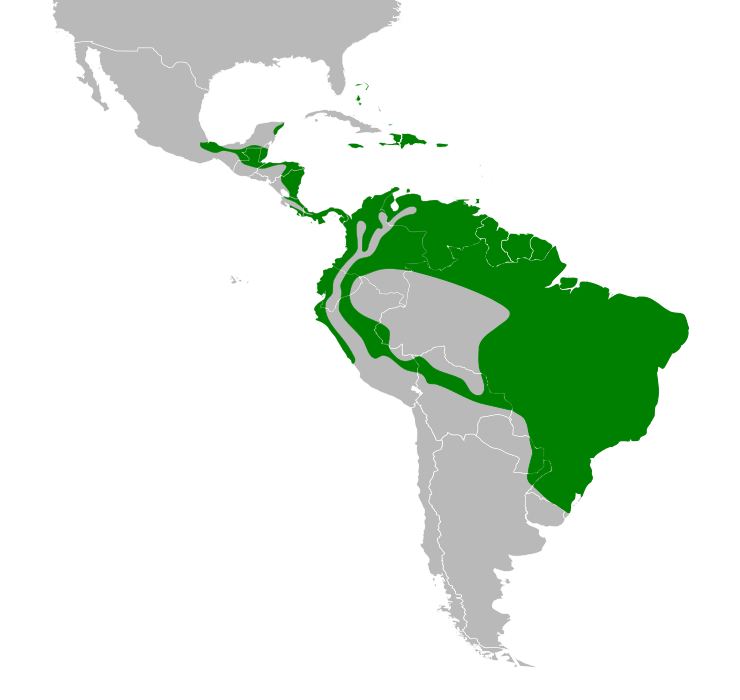
Data retrieved on September 27, 2026 at 3:59 PM