 Bird App
Bird of the day
Rufous-naped lark
Mirafra africana
The rufous-naped lark (Corypha africana) or rufous-naped bush lark is a widespread and conspicuous species of lark in the lightly wooded grasslands, open savannas and farmlands of the Afrotropics. Males attract attention to themselves by a bold and often repeated wing-fluttering display from a prominent perch, which is accompanied by a melodious and far-carrying whistled phrase. This rudimentary display has been proposed as the precursor to the wing-clapping displays of other bush lark species. They have consistently rufous outer wings and a short erectile crest, but the remaining plumage hues and markings are individually and geographically variable. It has a straight lower, and longish, curved upper mandible.
The rufous-naped lark is a fairly large and robust lark species, with rather heavy flight. The sexes are similar, but males average larger and heavier. Adults are individually and geographically variable. It measures 15–18 cm from bill tip to tail tip and weighs 40-44 g. The streaked upper parts, short erectile crest, creamy-buff eyebrow that merges with the lore, and the rufous flight feathers are easily discernible features. The hindcrown and nape are streaked along the feather centers while the margins vary from chestnut, rufous or pinkish buff to greyish brown. The wings appear conspicuously rufous in flight, while the outer edges of the primaries show up as a rufous panel on the closed wing. The underwing coverts are rufous, and upper coverts are broadly edged tawny or buff (or grey in race grisescens). The tail is dark brown, but the outer webs of the outer tail feathers vary from buff (cf. africana and sharpii) to tawny or bright rufous. The mantle is lighter brown than the back, and the rump still darker brown. The flanks are a shade darker than the rufous-buff belly, but regionally the plumage may also be stained red by soil. The throat is unmarked but the pale rufous upper breast is streaked and spotted darker brown. The eyes are hazel brown, the longish bill is blackish and pinkish, and the feet pink to pinkish brown. Juveniles have bold black spotting on the crown, mantle and wing coverts, all edged with buff, while the breast spotting is more blotchy or diffuse.
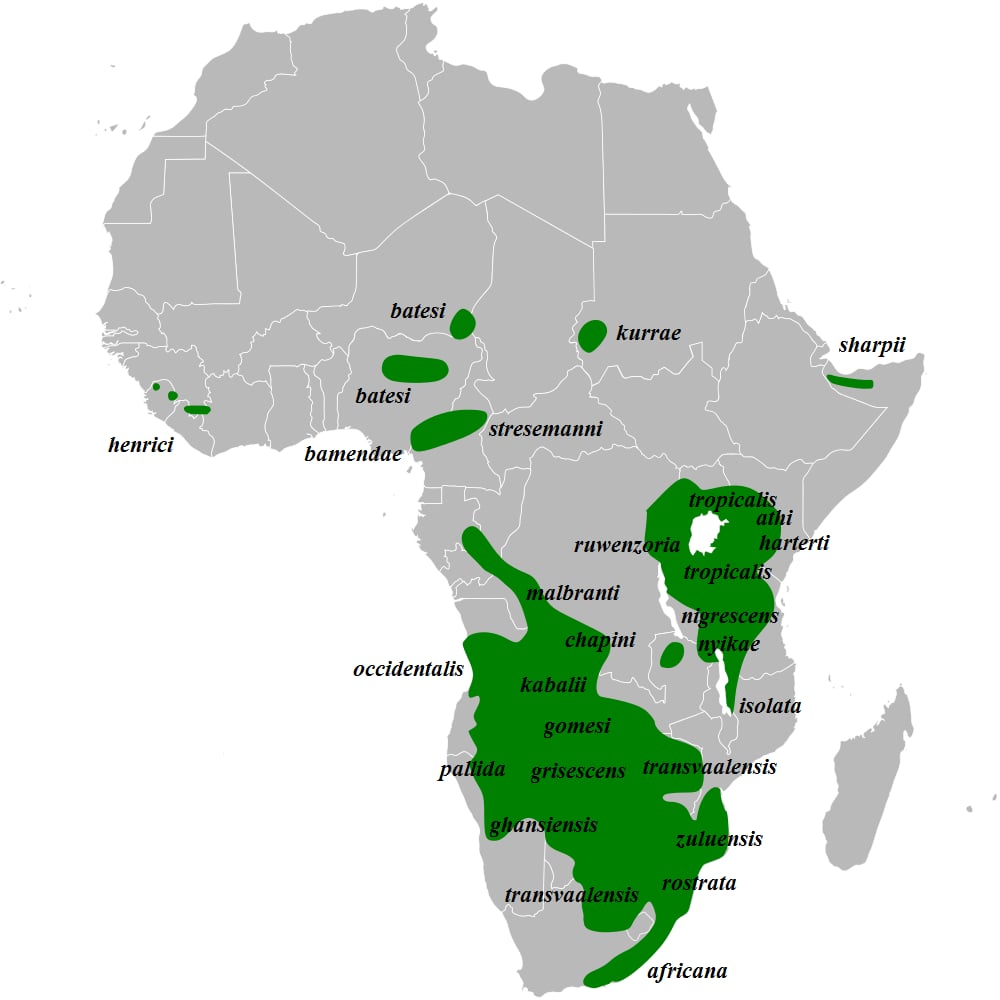
M. a. athi of the Kenyan highlands is typically coloured, but like other tropical races, lacks the rufous nape. Most accepted races are distinguished based on the colour of the back or underpart plumage, or the amount of streaking on the ear coverts and flanks. High altitude races M. a. nyikae and M. a. nigrescens, which occur above 2,000 meters, have very dark upper part plumages and increased flank streaking. M. a. tropicalis which is found above 1,000 meters has a solid rufous wash over the underparts. Of the southern African races, those in the southeast are the largest and darkest (cf. M. a. africana and M. a. rostrata), with a cline towards lightly streaked and pale pinkish plumages in the northwest.
Aliases
Rufous-naped Lark
Range
Data retrieved on October 14, 2025 at 8:02 PM