 Bird App
Bird of the day
Clark's nutcracker
Nucifraga columbiana
Clark's nutcracker (Nucifraga columbiana), also known as Clark's crow, is a passerine bird in the family Corvidae, native to the mountains of western North America. The nutcracker is an omnivore, but subsists mainly on pine nuts, burying seeds in the ground in the late summer and fall, and then retrieving them in the winter and spring by memory. The bird was described by the Lewis and Clark Expedition, with William Clark first observing it in 1805 along the banks of the Salmon River, a tributary of the Columbia River.
Nucifraga columbiana is roughly the size of a jay, and slightly smaller than its Eurasian congenerics (northern, southern, and Kashmir nutcrackers). Its head, back, belly, and ventrum are covered in gray feathers, and it sports black wings with white tips on secondary feathers. Its tail feathers are easily distinguishable in flight, with central black feathers bordered by white feathers on either side. It has a long, black, pointed bill whose shape is specialized for removing the scales of pinecones.
Length: 27–30 cm (11–12 in)
Weight: 106–161 g (3.7–5.7 oz)
Wingspan: 60 cm (24 in)
Aliases
Nucifraga columbiana
Range
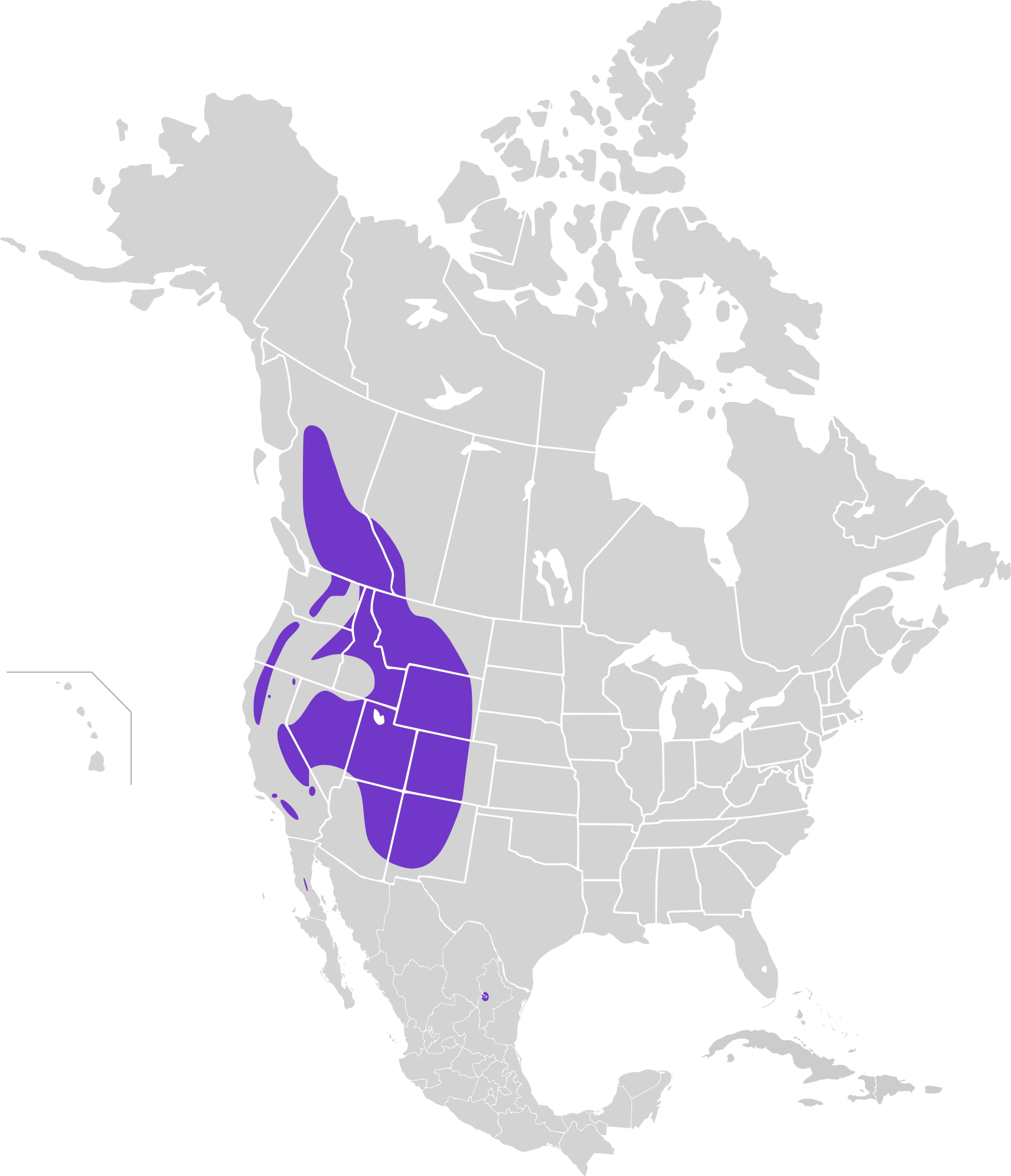
Data retrieved on September 27, 2026 at 6:01 PM