 Bird App
Bird of the day
Taiga bean goose
Anser fabalis
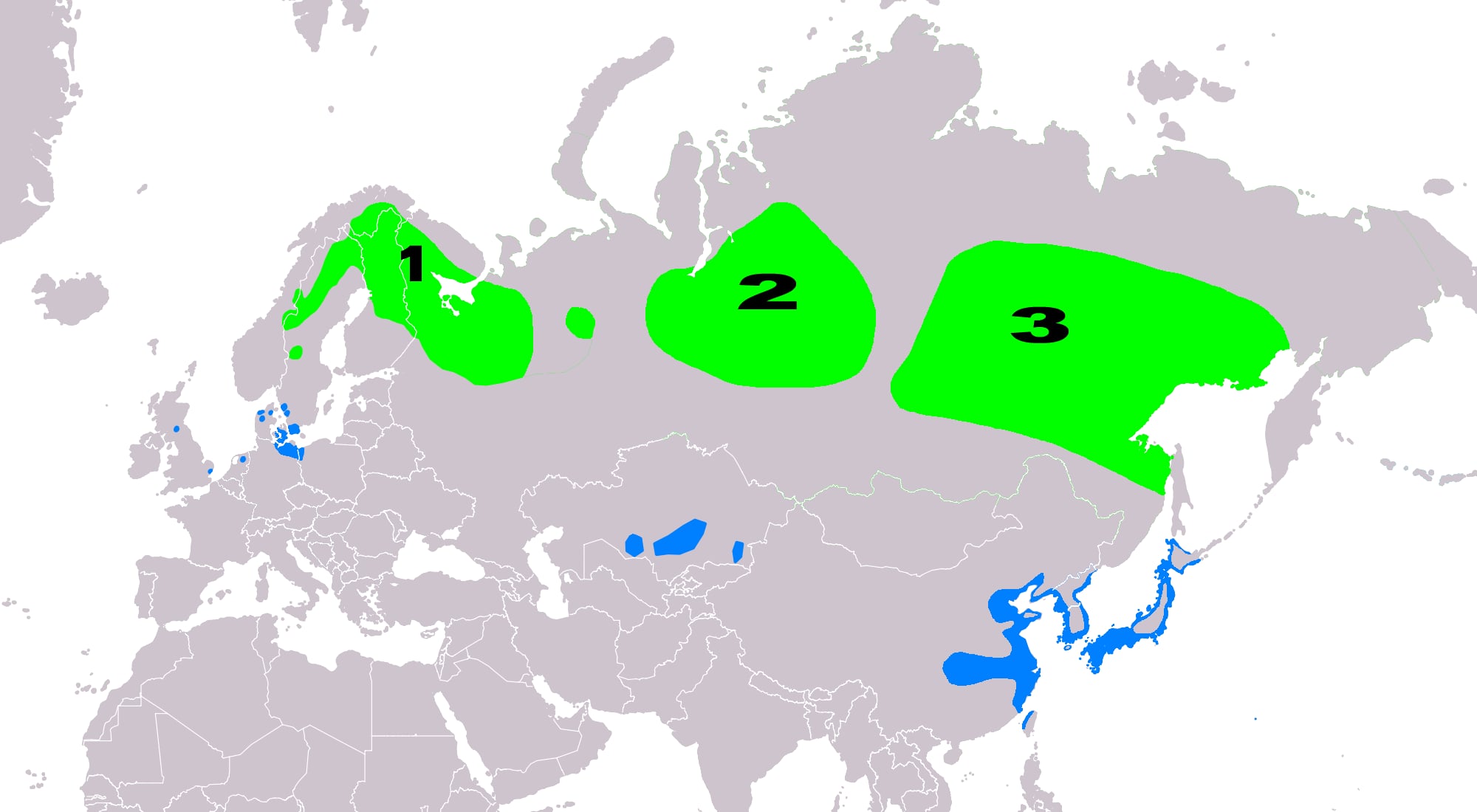
The taiga bean goose (Anser fabalis) is a species of goose that breeds in northern Europe and Asia. It is migratory and winters further south in Europe and Asia. This and the tundra bean goose were recognised as separate species by the International Ornithologists' Union and the American Ornithological Society from 2007, but are still considered a single species by some other authorities (collectively called bean goose), notably BirdLife International and the IUCN. The taiga and tundra bean goose diverged about 2.5 million years ago and established secondary contact c. 60,000 years ago, resulting in extensive gene flow.
The length ranges from 68 to 90 cm (27–35 in), wingspan from 140 to 174 cm (55–69 in) and weight from 1.7–4 kg (3.7–8.8 lb). In the nominate subspecies, males average 3.2 kg (7.1 lb) and females average 2.84 kg (6.3 lb). The bill is black at the base and tip, with an orange band across the middle; the legs and feet are also bright orange.
The upper wing-coverts are dark brown, as in the white-fronted goose (Anser albifrons) and the lesser white-fronted goose (A. erythropus), but differing from these in having narrow white fringes to the feathers. The voice is a loud honking.
The closely related pink-footed goose (A. brachyrhynchus) has the bill short, bright pink in the middle, and the feet also pink, the upper wing-coverts being paler and greyer, nearly of the same bluish-grey as in the greylag goose. In size and bill structure, it is very similar to the tundra bean goose subspecies Anser serrirostris rossicus, and in the past was sometimes treated as a sixth subspecies of bean goose.
Aliases
Anser fabalis
Range
Data retrieved on October 15, 2025 at 7:56 AM