 Bird App
Bird of the day
Calliope hummingbird
Selasphorus calliope
The calliope hummingbird ( kə-LY-ə-pee; Selasphorus calliope) is the smallest bird native to the United States and Canada. It has a western breeding range mainly from California to British Columbia, and migrates to the Southwestern United States, Mexico, and Central America for its wintering grounds. The calliope hummingbird is the smallest known long-distance bird migrant, completing migrations twice per year of some 9,000 km (5,600 mi).
It was previously considered the only member of the genus Stellula (meaning little star), but research evidence suggests its existing placement in the genus Selasphorus. The bird was named after the Greek muse Calliope.
The calliope is the smallest breeding bird found in Canada and the United States. An adult calliope hummingbird can measure 7–10 cm (2.8–3.9 in) in length, span 11 cm (4.3 in) across the wings and weigh 2 to 3 g (0.071 to 0.106 oz).
Calliope hummingbirds have glossy green on the back and crown with white underparts. The adult male has wine-red streaks on the gorget, green flanks, and a dark tail. When an adult male is competing for territory or females, the dark red feathers of its gorget distend outwards to create a more distinct appearance. Females and immatures have a pinkish wash on the flanks, dark streaks on the throat and a dark tail with white tips. The only similar birds are the rufous hummingbird and the Allen's hummingbird, but these birds are larger with more distinct and contrasting rufous markings on the tail and flanks, and longer central tail feathers.
Aliases
Calliope Hummingbird
Range
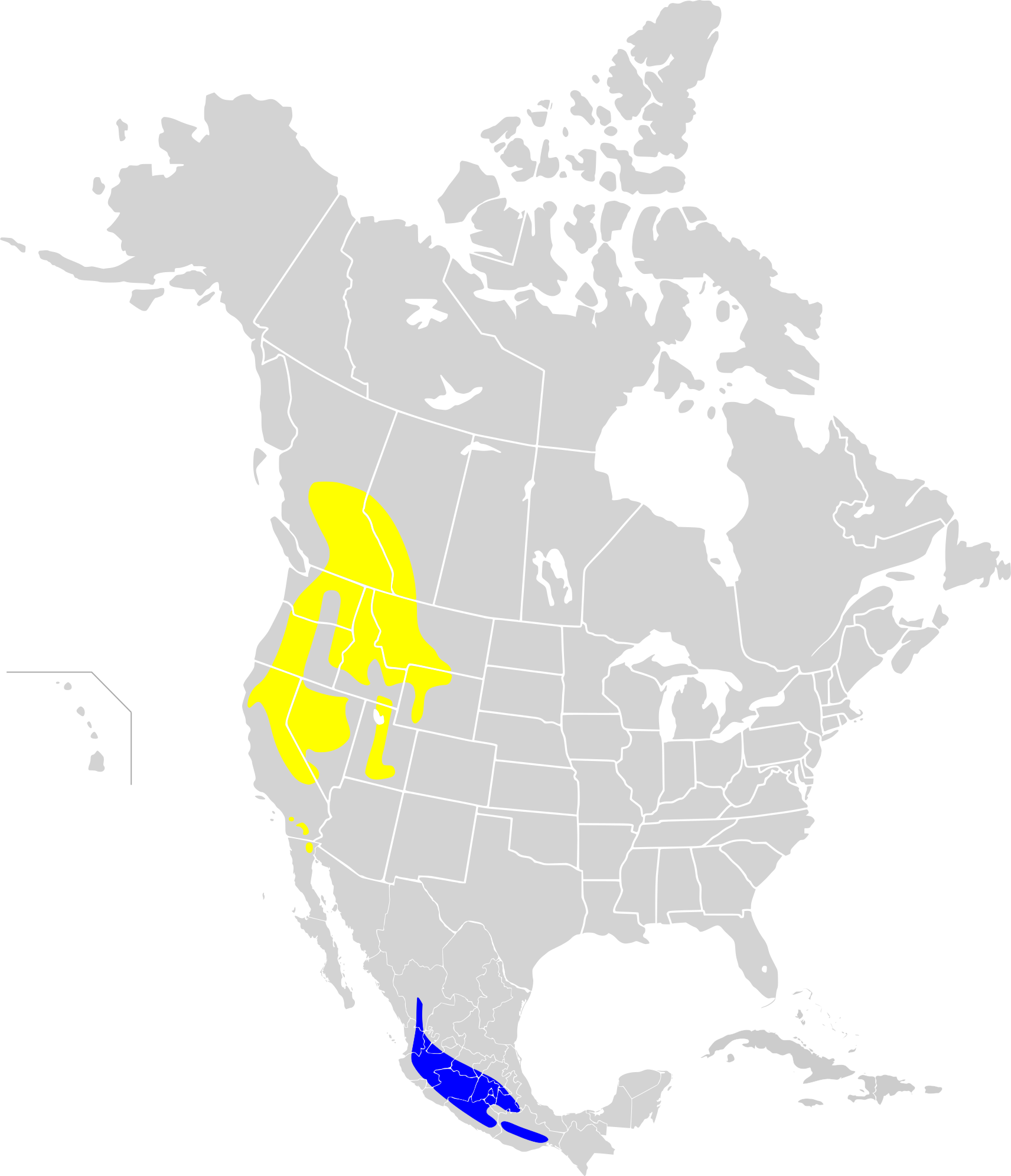
Data retrieved on September 27, 2026 at 6:00 PM