 Bird App
Bird of the day
Black-necked stork
Ephippiorhynchus asiaticus
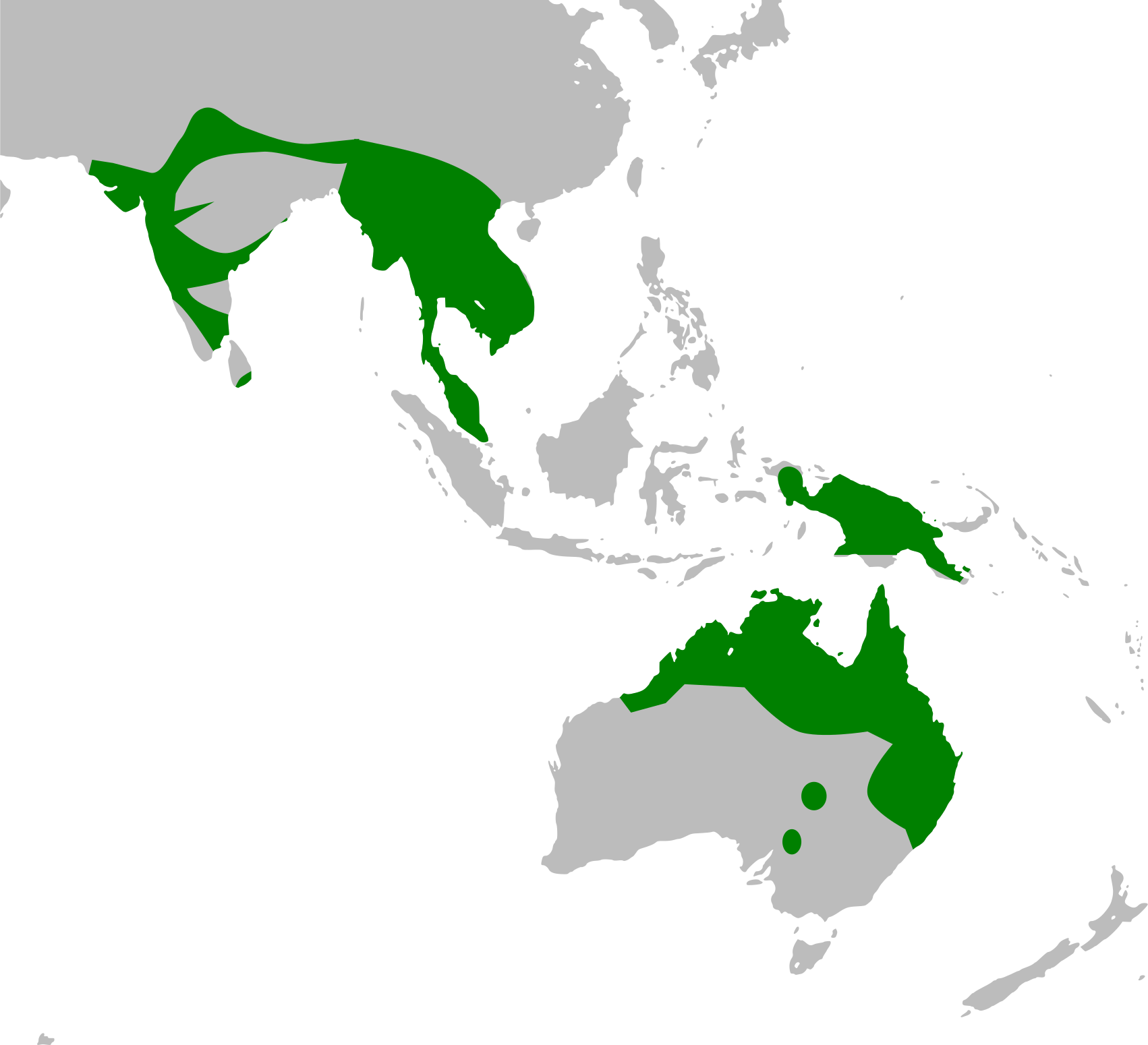
The black-necked stork (Ephippiorhynchus asiaticus) is a tall long-necked wading bird in the stork family. It is a resident species across the Indian Subcontinent and Southeast Asia with a disjunct population in Australia. It lives in wetland habitats and near fields of certain crops such as rice and wheat where it forages for a wide range of animal prey. Adult birds of both sexes have a heavy bill and are patterned in white and irridescent blacks, but the sexes differ in the colour of the iris with females sporting yellow irises and males having dark-coloured irises. In Australia, it is known as a jabiru although that name refers to a stork species found in the Americas. It is one of the few storks that are strongly territorial when feeding and breeding.
The black-necked stork is a large bird, 129–150 cm (51–59 in) tall having a 230-centimetre (91 in) wingspan. The only published weight for this species was a single specimen at 4,100 g (9.0 lb), but this is nearly 35% less than the mean body mass of the closely related and similar sized saddle-billed stork. Therefore, this specimen of black-necked stork could have been at the low end of sizes attainable or perhaps somewhat malnourished. The plumage patterns are conspicuous with younger birds differing from adults. Adults have a glossy bluish-black iridescent head, neck, secondary flight feathers and tail; a coppery-brown crown; a bright white back and belly; bill black with a slightly concave upper edge; and bright red legs. The sexes are identical but the adult female has a yellow iris while the adult male has it brown. Juveniles younger than six months have a brownish iris; a distinctly smaller and straighter beak; a fluffy appearance; brown head, neck, upper back, wings and tail; a white belly; and dark legs. Juveniles older than six months have a mottled appearance especially on the head and neck where the iridescence is partly developed; dark-brown outer primaries; white inner primaries that forms a shoulder patch when the wings are closed; a heavy beak identical in size to adults but still straighter; and dark to pale-pink legs. Like most storks, the black-necked stork flies with the neck outstretched, not retracted like a heron. In flight it appears spindly and a black bar running through the white wings (the somewhat similar looking migratory black stork has an all black wing) with black neck and tail make it distinctive.
Aliases
Ephippiorhynchus asiaticus, jabiru
Range
Data retrieved on October 15, 2025 at 7:51 AM