Bird App
Bird of the day
Thrush nightingale
Luscinia luscinia
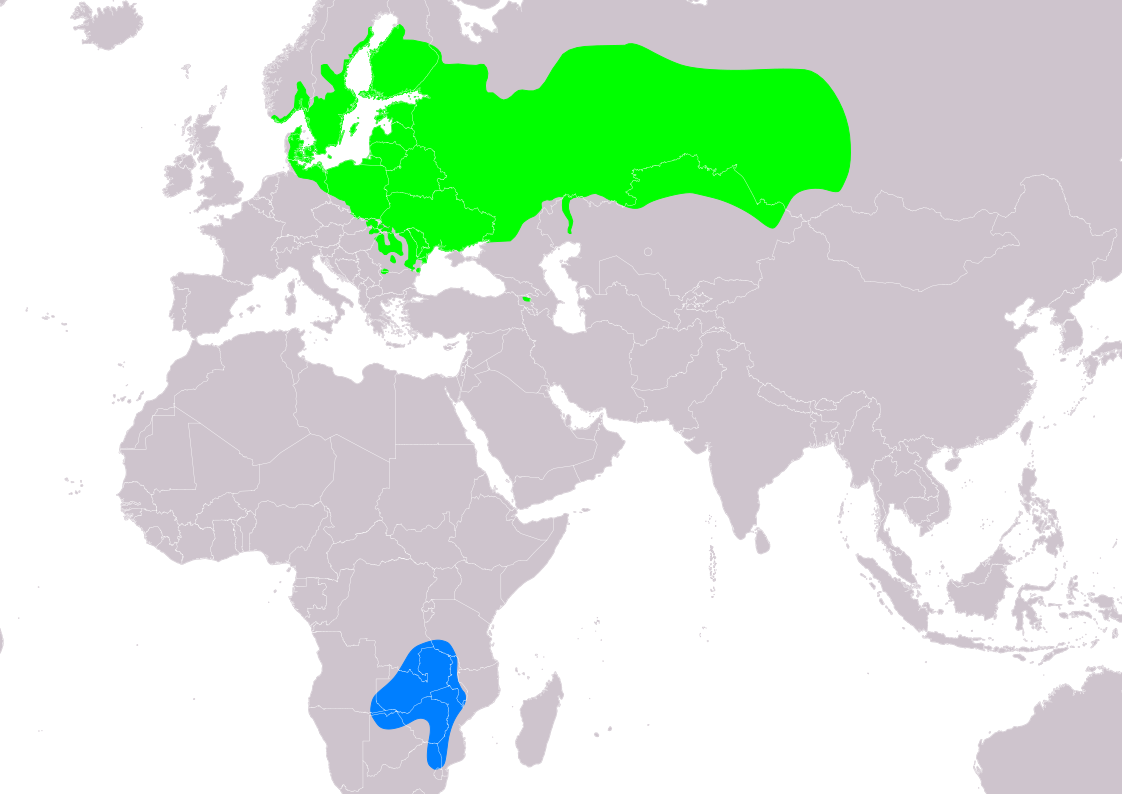
The thrush nightingale (Luscinia luscinia), also known as the sprosser, is a small passerine bird in the Old World flycatcher family. It is a migratory species breeding in forests in Europe and the Palearctic and overwintering in Africa. An insectivore, it nests near the ground in dense undergrowth. Its distribution is more northerly than the very closely related common nightingale (Luscinia megarhynchos), which it closely resembles in appearance. Hybrids between the two have occurred in areas where their ranges overlap.
The thrush nightingale is similar in size to the European robin. Sexes are similar, both being plain greyish-brown above and white and greyish-brown below. Its greyer tones, giving a cloudy appearance to the underside, and lack of the common nightingale's obvious rufous tail side patches are the clearest plumage differences from that species. It also has a similar but somewhat more solemn song than that of L. megarhynchos. The nightingales, and similar small European species, are often called chats.
An adult thrush nightingale is about 16 centimetres (6.3 in) long with a wingspan of approximately 18 centimetres (7.1 in). The head, nape and the whole of the upper parts of the thrush nightingale are dark brown with a slight olive tinge. The colour is much deeper than that of the nightingale and is not at all rufous. The upper tail-coverts are less olivaceous and the tail feathers are dark rufous-brown. The lores and ear-coverts are brownish-black and the chin and throat are pale buff or whitish, mottled with brown, and are paler in colour than the nightingale. The sides of the throat are spotted brown and the pale feathers of the breast have brown central bands giving the breast a mottled appearance. The under tail-coverts are buff, sometimes barred or marked with brown. The wing feathers and wing-coverts are dark brown and less rufous than the nightingale. The beak, legs and feet are brown and the irises are dark brown. The sexes are similar to each other in appearance and the juveniles are darker and more mottled. There is a single moult in July and August at the end of the breeding season.
The male's song is loud, with a range of whistles, trills and clicks and includes a flute-like "pioo" with a pure bell-like tone. It is sometimes interrupted by a rasping "dserr" sound and is rather solemn as compared to that of the common nightingale. The song does not have that bird's loud whistling crescendo and is quite distinctive. It is also sometimes sung in the bird's winter quarters. The call-note "whit" resembles that of the common nightingale but is higher pitched and more abrupt.
Aliases
Luscinia luscinia
Range