Bird App
Bird of the day
African penguin
Spheniscus demersus
The African penguin (Spheniscus demersus), also known as Cape penguin or South African penguin, is a species of penguin confined to southern African waters. It is the only penguin found in the Old World. Like all penguins, it is flightless, with a streamlined body and wings stiffened and flattened into flippers for a marine habitat. Adults weigh an average of 2.2–3.5 kg (4.9–7.7 lb) and are 60–70 cm (24–28 in) tall. The species has distinctive pink patches of skin above the eyes and a black facial mask. The body's upper parts are black and sharply delineated from the white underparts, which are spotted and marked with a black band.
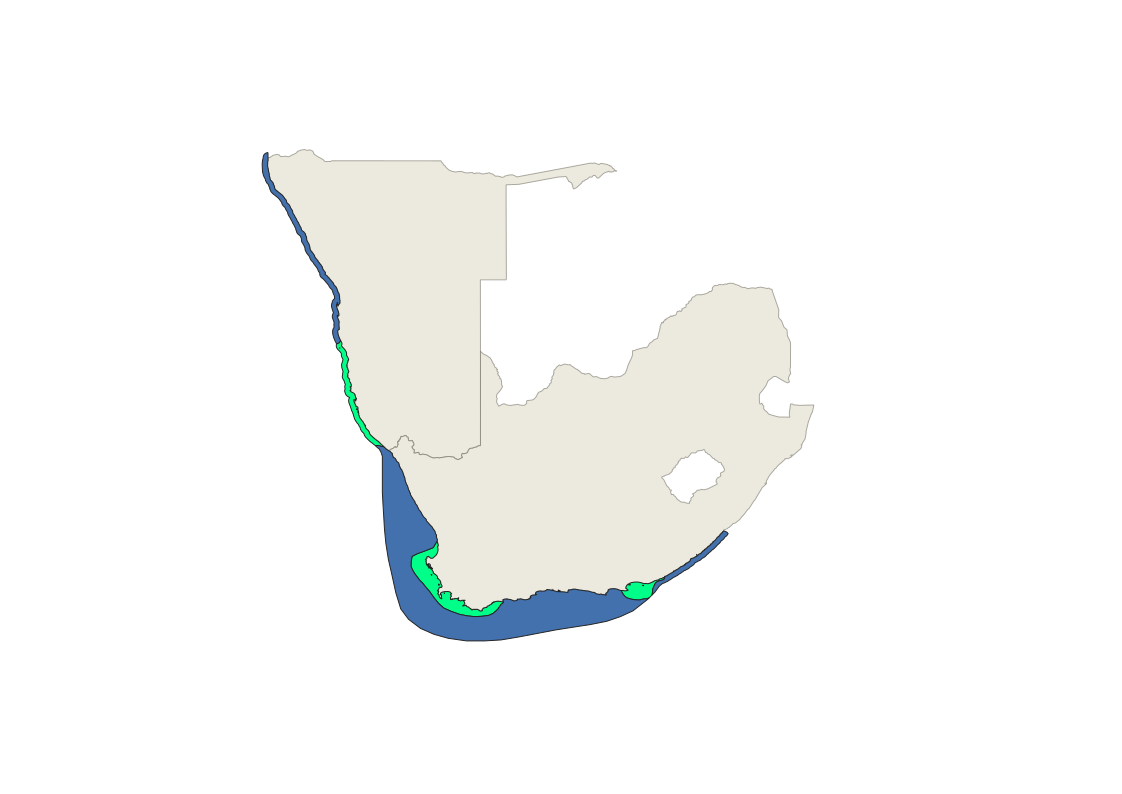
The African penguin is a pursuit diver and feeds primarily on fish and squid. Once extremely numerous, the African penguin is now the rarest species of penguin, classified as critically endangered, with its population declining rapidly due to a combination of several threats, such as habitat loss, overfishing and climate change. It is a charismatic species and is popular with tourists. Other vernacular names of the species include black-footed penguin and jackass penguin, due to the species' loud, donkey-like noise (although several related species of South American penguins produce the same sound). They can be found along the coast of South Africa and Namibia.
African penguins grow to 60–70 cm (24–28 in) tall and weigh between 2.2–3.5 kg (4.9–7.7 lb). The beak length of the African penguin varies, usually growing between 4.8–6.5 cm (1.9–2.6 in). They have a black stripe and black spots on the chest, the pattern of which is unique to each penguin, like human fingerprints. The sweat glands above the eyes cool the birds' blood and as the temperature rises, increased blood flow causes the glands to get pinker. This species exhibits slight sexual dimorphism; the males are slightly larger than the females and have longer beaks. Juveniles do not possess the bold, delineated markings of the adult, but instead have dark upperparts that vary from greyish-blue to brown; the pale underparts lack both spots and the band. The beak is more pointed than that of the Humboldt penguin. The African penguin's colouring is a form of protective colouration known as countershading. The white undersides of the birds are difficult to spot by predators under the water and the penguins' black backs blend in with the water when viewed from above.
African penguins resemble and are related to the Humboldt, Magellanic and Galápagos penguins. African penguins have a very recognisable appearance, with a thick band of black that is in the shape of an upside-down horseshoe. They have black feet and black spots that vary in size and shape between individuals. Magellanic penguins share a similar bar marking that often confuses the two; the Magellanic has a double bar on the throat and chest, whereas the African has a single bar. These penguins are sometimes called "jackass penguins", which comes from the loud braying noises they make.
Aliases
Spheniscus demersus, Cape penguin, South African penguin, black-footed penguin, jackass penguin
Range