Bird App
Bird of the day
Cassin's sparrow
Peucaea cassinii
Cassin's sparrow (Peucaea cassinii) is a medium-sized sparrow.
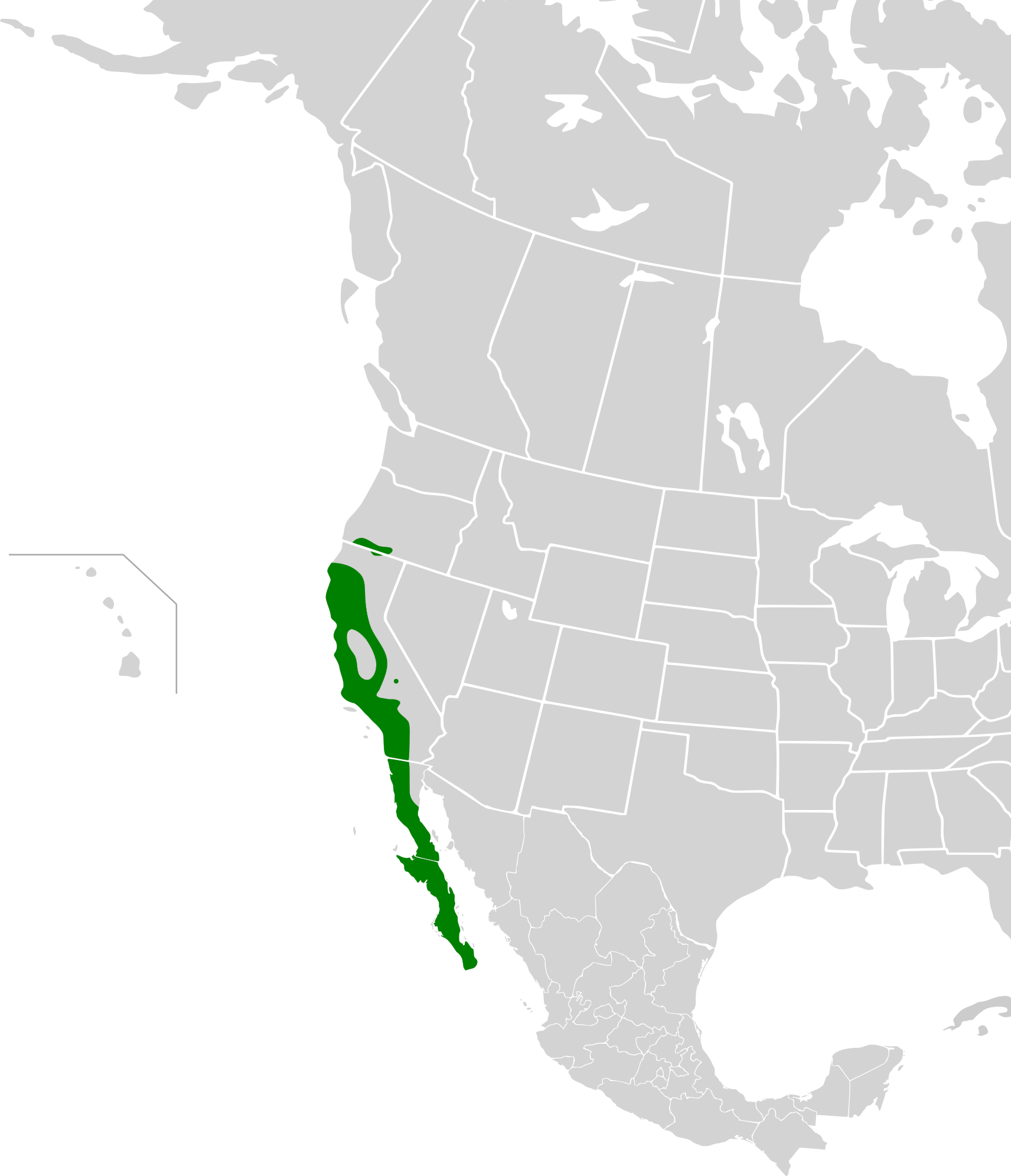
This passerine bird's range is from western Nebraska to north-central Mexico.
The sparrow has a long tail, gray-brown with white corners, and has dark marks on the back and sides. The species resembles Botteri's sparrow because of its size and marks, but Boterri's sparrow is a weaker shade of gray. The best way to tell the differences between the two is the song of Cassin's sparrow. Both the males and females are the same shade of gray and are 5 to 6 inches, although males are bigger.
The Cassin's sparrow is a fairly large, plain, grayish sparrow that lacks conspicuous markings. In flight, the long, roundish tail is obvious and the white tips of the tail feathers are sometimes apparent. This species is most easily identified by its distinctive song and dramatic skylarking behavior during the breeding season. Although often characterized in the literature as secretive and difficult to observe when not singing, Schnase (1984) observed that Cassin's sparrows readily accommodated the presence of an observer, especially early in the breeding season.
The head is brown streaked with gray and dark brown; the supercilium is buff, and there is a thin, dark brown submoustachial stripe. The bill is brownish gray, with darker upper mandible and pale bluish gray tomial edge and lower mandible. The iris is dark brown. The chin, throat and breast are pale gray or brownish gray; the belly is whitish; and there are a few well-defined dark brown or black streaks on the lower flanks. On the back, the mantle and scapulars are described as brown or gray with a rusty tinge, the feathers having dark brown subterminal spots and edged with buff or gray, giving a scaly or variegated appearance. Wings are brown; greater coverts are broadly tipped and narrowly edged with buff or grayish white, forming a wing bar variously described as fairly conspicuous to indistinct. The alula is pale yellow. Feathers in the upper tail coverts have a gray edge, a brown center, and a black subterminal crescent. The undertail coverts are buffy. Most of the upper side of the tail is dark, dusky brown, but the central two rectrices are pale brownish gray with a serrated dark central strip that spreads out into a suggestion of faint crossbars. The lateral two rectrices are edged and tipped in pale gray or white, with smaller pale areas at the tips of the next two pairs inward. This is sometimes noticeable on a bird flushing or flying away, but it is not always apparent, and by late summer, pale tips may be partly or completely worn away. Legs are described as dull pinkish or dark flesh.
Juveniles are similar to adults with a brown back, feathers with buffy tips and darker brown central streaks, greater coverts edged with white, and light streaking on breast and throat.
Some birds, mainly in the eastern part of their range, tend to be more rufous above, slightly buffier below, and have plainer tails with less obvious shaft streaks and barring on the central rectrices. Although rarer, even in the eastern part of the range, the rufous morph has been observed as far away as the Farallon Islands off California.
Cassin's sparrows have an unusual sequence of molts and plumages. They replace all of their pennaceous body feathers twice within the bird's first six months of age, and adults gradually molt their body feathers throughout the breeding season. Designated as a presupplemental molt, this molt has been fully documented in certain species only recently, having been found in 16 species of North American passerines to date.
Aliases
Peucaea cassinii
Range