Bird App
Bird of the day
Pectoral sandpiper
Calidris melanotos
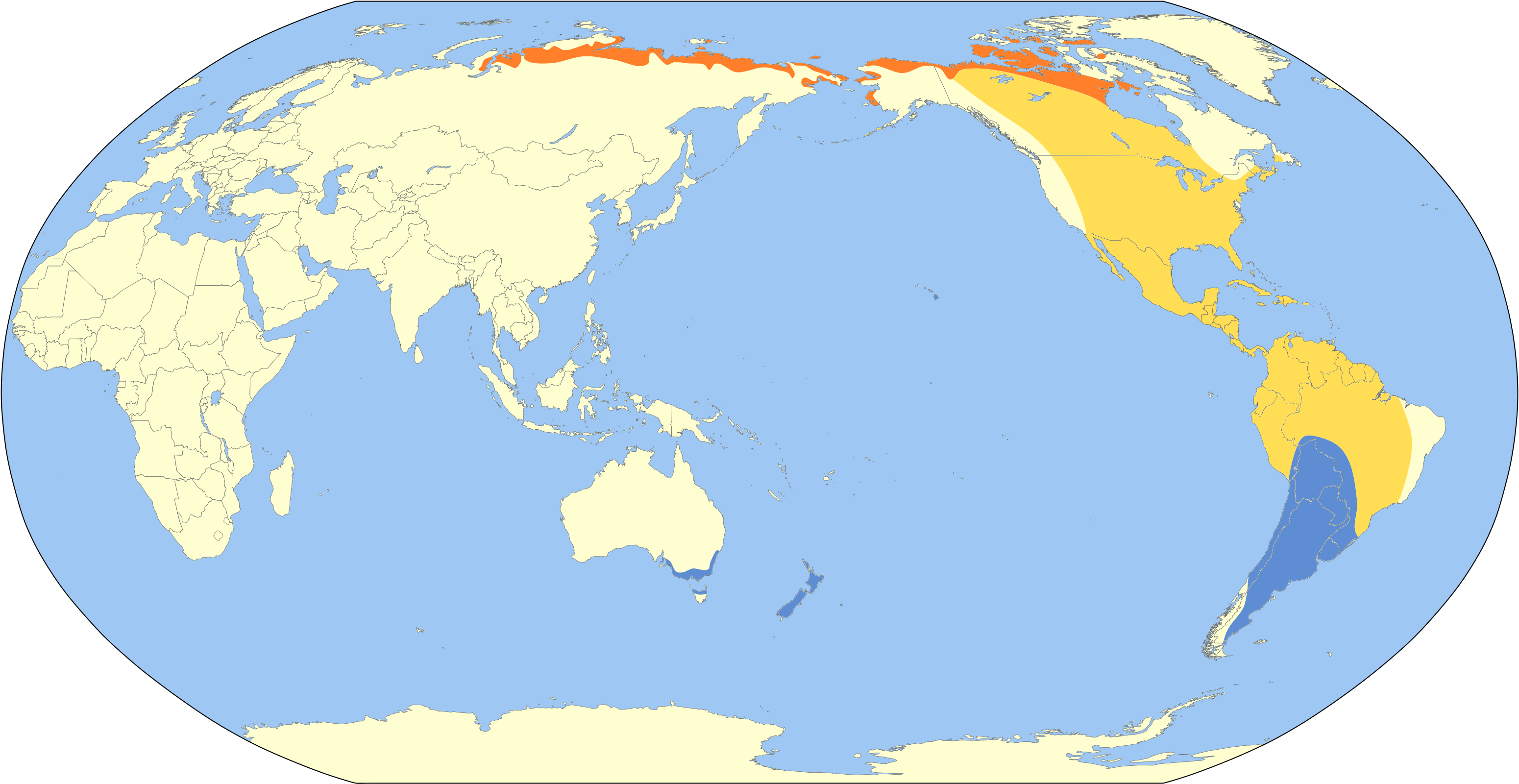
The pectoral sandpiper (Calidris melanotos), often abbreviated pec, is a small, migratory wader that breeds in North America and Asia, wintering in South America and Oceania. It eats small invertebrates. Its nest, a hole scraped in the ground and with a thick lining, is deep enough to protect its four eggs from the cool breezes of its breeding grounds. The pectoral sandpiper is 21 cm (8.3 in) long, with a wingspan of 46 cm (18 in).
This bird looks similar to the widely sympatric sharp-tailed sandpiper ("C." acuminata), which is not a member of the stint clade however. The pectoral sandpiper is a largish calidrid (21 cm (8.3 in) in length, with a wingspan of 46 cm (18 in)) with a grey-brown back, brownest in the summer male, and grayest in winter. The pectoral sandpiper has a grey breast, sharply demarcated at its lower edge, which gives this species its English name; this clear dividing line is particularly conspicuous if the birds are turned towards the observer. The legs are yellowish, and the bill is olive with a darker tip.
The juveniles are more brightly patterned above with rufous coloration and white mantle stripes.
This species differs from the sharp-tailed sandpiper in its breast pattern, weaker supercilium and grayer crown.
Aliases
Calidris melanotos
Range