Bird App
Bird of the day
Savi's warbler
Locustella luscinioides
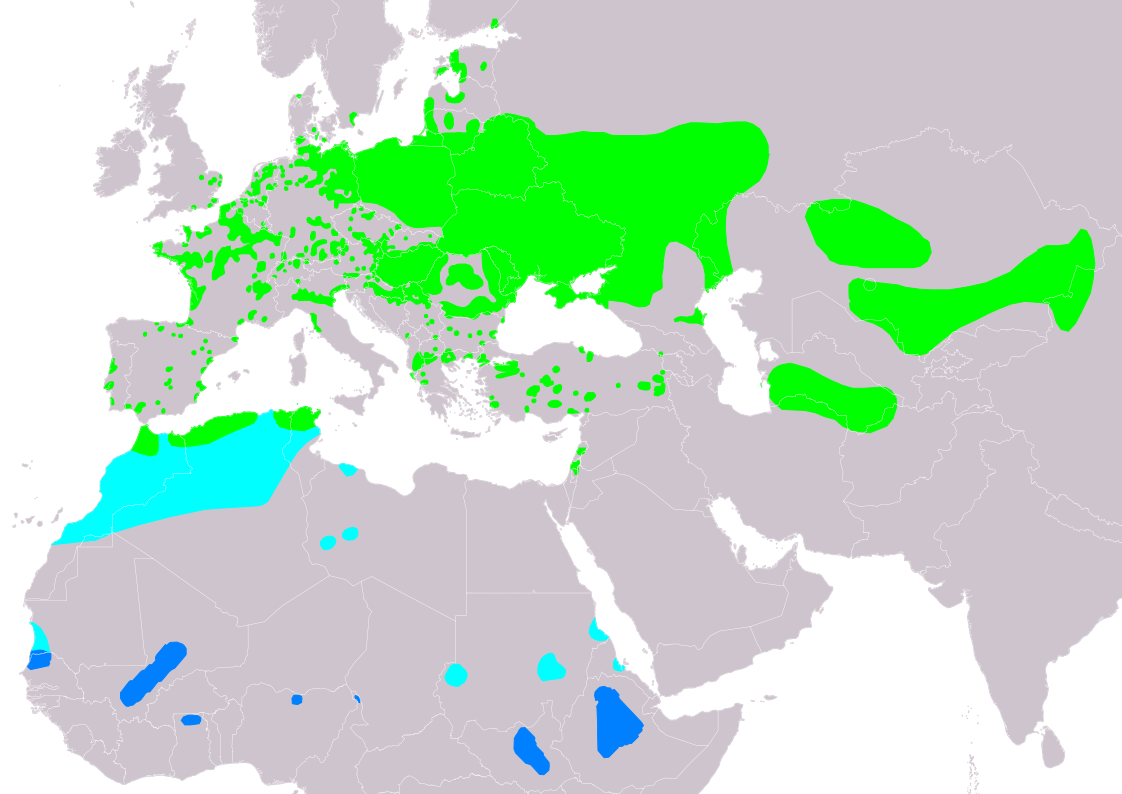
Savi's warbler (Locustella luscinioides) is a species of Old World warbler in the genus Locustella. It breeds in Europe and the western Palearctic. It is migratory, wintering in northern and sub-Saharan Africa.
This small passerine bird is found in reed beds, usually with some bushes. Three to six eggs are laid in a nest in reeds. The adult has an unstreaked grey-brown back, whitish grey underparts and a lack of throat streaks, which is a distinction from the river warbler. The sexes are identical, as with most warblers, but young birds are yellower below. Like most warblers, it is insectivorous. This is not a shy species, but can be difficult to see in the reeds except sometimes when singing.
The song is a monotonous mechanical insect-like reeling, often given at dusk. It is similar to the song of other species in the group, but is generally faster and deeper and bears a strong resemblance to that of Roesel's bush-cricket.
The upper-parts of Savi's warbler are a uniform dark reddish-brown, sometimes with a slight greenish tinge. It has indistinct buff eye-stripes, dark lores and pale brown ear-coverts. The brown beak is slender and the irises are also brown. The chin, throat and belly are whitish-buff and the rest of the underparts sandy brown. In the breeding season, both upper-parts and underparts are slightly paler. The legs are brown. The bird is around 14 cm (5.5 in) long.
The song is a trill very similar to that of the grasshopper warbler but slightly lower pitched and less prolonged. It is often preceded by a series of low ticks which gradually merge into the trill. The bird sings from high on a reed head with open beak and vibrating throat. Both males and females sing.
Aliases
Locustella luscinioides, Savi’s Warbler
Range