Bird App
Bird of the day
Lance-tailed manakin
Chiroxiphia lanceolata
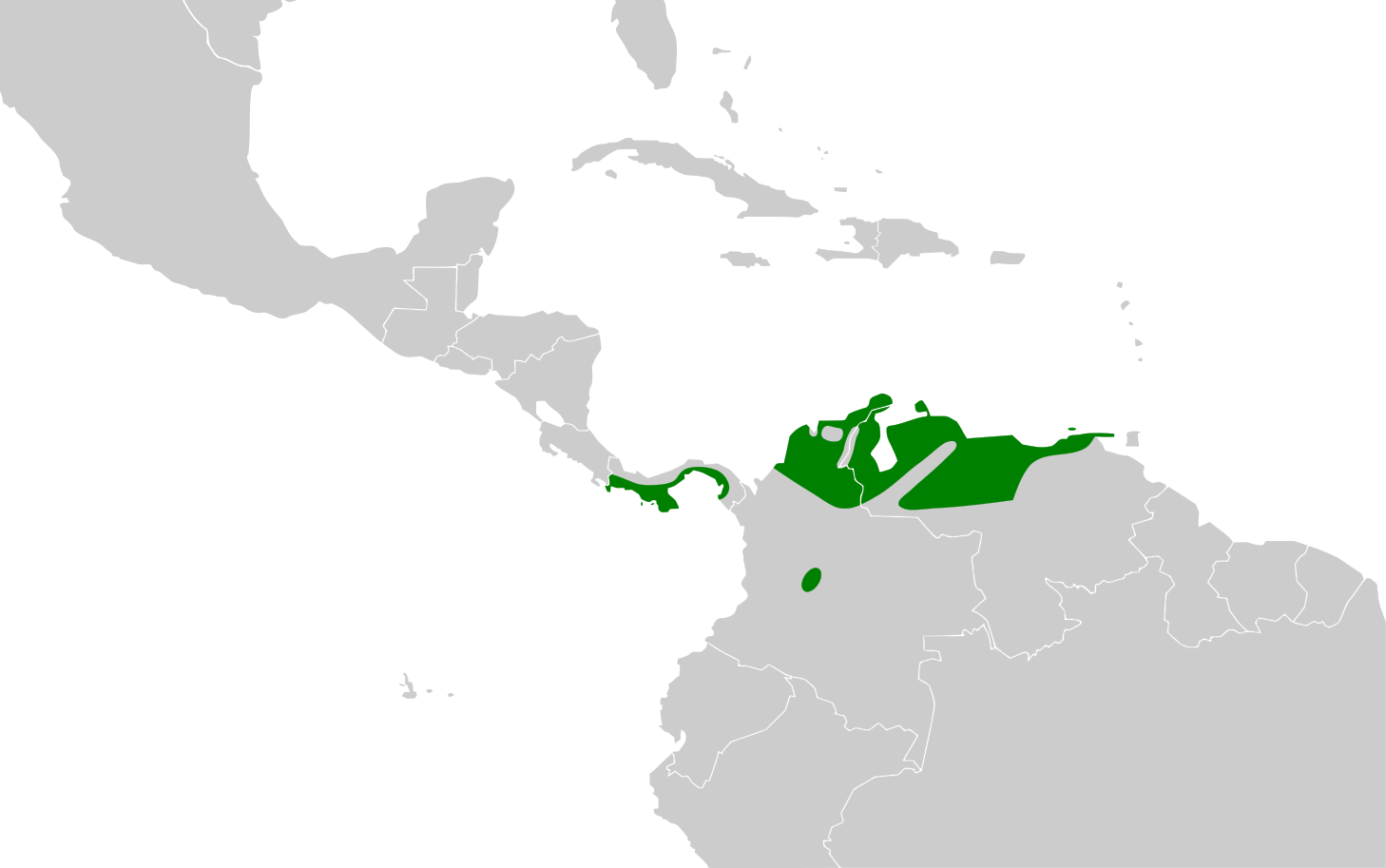
The lance-tailed manakin (Chiroxiphia lanceolata) is a small passerine bird which breeds in tropical Central and South America from Costa Rica to northern Venezuela. This manakin is a fairly common bird of dry and moist deciduous forests, but not rainforest. It is a small, compact bird about 13 centimetres (5 in) long and similar to the blue-backed manakin, but both sexes have the two central tail feathers elongated to form a spike. Males have black plumage with a blue back, a red crown and orange legs. Females and juveniles are olive-green with paler underparts. At breeding time, males are involved in a cooperative behaviour during which they jump up and down alternately. This is a fairly common species with a wide range, and the International Union for Conservation of Nature has rated its conservation status as being of "least concern".
Like other manakins, the lance-tailed manakin is a compact, brightly coloured forest bird, typically 13.5 cm long and weighing 17.5 g. Both sexes have bring orange legs and two central tail feathers elongated to form a spike.
Females are olive-green, with slightly paler underparts. Most females are solid green, however, a small portion have tawny or red caps. Adult males are mostly black, with a red cap and sky-blue back. Young males are olive but show a red cap and the start of a blue back as they mature. Male lance-tailed manakins do not reach their full adult plumage until approximately 26 months after hatching.
This species is similar to blue-backed manakin, Chiroxiphia pareola, which breeds further south and east, but the latter lacks the spiky tail, and the male has a somewhat darker blue back.
Aliases
Chiroxiphia lanceolata
Range