Bird App
Bird of the day
Grey partridge
Perdix perdix
The grey partridge (Perdix perdix) is a bird in the pheasant family Phasianidae of the order Galliformes, gallinaceous birds. The scientific name is the Latin for "partridge".
The grey partridge is a rotund bird, brown-backed, with grey flanks and chest. The belly is white, usually marked with a large chestnut-brown horse-shoe mark in males, and also in many females. Hens lay up to twenty eggs in a ground nest. The nest is usually in the margin of a cereal field, most commonly winter wheat.
Measurements:
Length: 29–31 cm (11–12 in)
Wingspan: 45–48 cm (18–19 in)
Weight (P. p. perdix): 320–455 g (11.3–16.0 oz)
Weight (P. p. robusta): 350–600 g (12–21 oz)
Males and females are the same size, and very similar in plumage, though the females tend to be slightly duller, and have a smaller dark belly patch. In the hand, the so-called "cross of Lorraine" on the tertiary coverts of females are marked with two transverse bars, as opposed to the one in males. These are present after around 16 weeks of age when the birds have moulted into adult plumage. Young grey partridges are mostly yellow-brown and lack the distinctive face and underpart markings. The song is a harsh, high-pitched kieerr-ik. When disturbed, like most gamebirds, it flies a short distance on rounded wings, often calling rick rick rick as it rises.
They are a seed-eating species, but the young in particular take insects as an essential protein supply. During the first 10 days of life, the young can only digest insects. The parents lead their chicks to the edges of cereal fields, where they can forage for insects.
Aliases
Perdix perdix
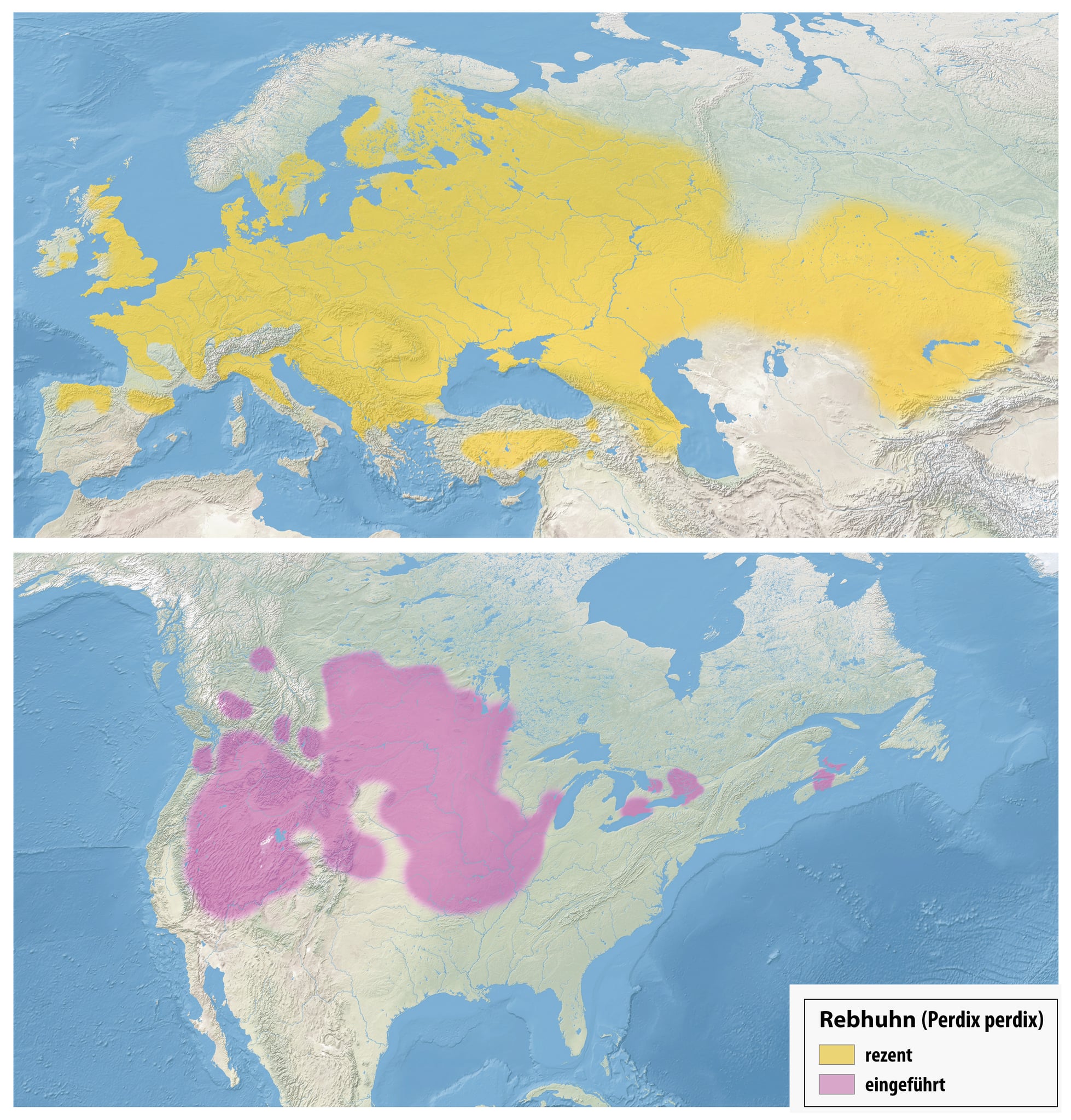
Range