Bird App
Bird of the day
Black-bellied cuckoo
Piaya melanogaster
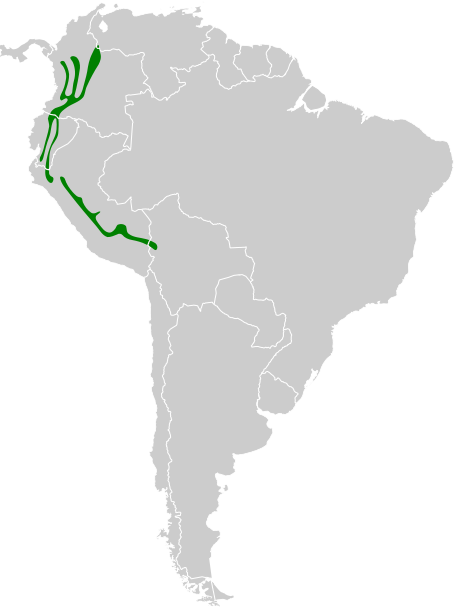
The black-bellied cuckoo or black-bellied squirrel cuckoo (Piaya melanogaster) is a bird of the family Cuculidae found in the Amazon region. Even though this species has a wide distribution, little is known about its ecology and natural history. The word melanogaster means "black belly"; it has Greek roots, melas meaning "black" and gaster meaning "belly".
The average length of adults is between 38 and 40.5 cm. The beak is of an intense purple/red color, the iris is dark red with a blue orbital skin and one yellow mole at the anterior side of each eye. The head is grey and contrasts with the ruffled back. The throat and chest are brown-reddish, cinnamon color and the belly and undertail coverts are black. The tail is black with conspicuous white stripes. The juveniles resemble adults.
P. melanogaster occurs within the range of the similar squirrel cuckoo (Piaya cayana). Black-bellied cuckoos are distinguished by a dark face and grey crown. The squirrel cuckoo has exposed yellow-greenish skin in the orbital area, the chest plumage is grey and it lacks the characteristic hood of the black-bellied cuckoo.
Their characteristic song is "dyerií-dyu, dyerií-dyu, dyerií-dyu…" sometimes repeated for a few minutes. It is often difficult to trace their position as they typically remain motionless in the forest when singing. They also produce faint grunts.
The genus Playa is considered paraphyletic. The little cuckoo was formerly considered a third member of the genus but has now been placed in the Coccycua.
Aliases
Piaya melanogaster
Range