Bird App
Bird of the day
Bay-breasted warbler
Setophaga castanea
The bay-breasted warbler (Setophaga castanea) is a small species of songbird in the New World warbler family, Parulidae. It is one of thirty-four species in the diverse genus Setophaga. Like all songbirds, or passerines, the species is classified in the order Passeriformes.
Adult males in breeding plumage are primarily grayish above, with two white wing bars, dark streaks on the back, and a creamy neck patch. The face is black, and the crown, throat, and sides are a dark chestnut color. Breeding females are similar in overall pattern to the males, but are paler and duller. In the nonbreeding season, both sexes gain olive-green feathers on the back, nape, and head. The rufous on the flanks is limited and may even fade away entirely in nonbreeding females. The two white wing bars are present in all plumages.
In breeding plumage, the bay-breasted warbler may be confused with the chestnut-sided warbler (Setophaga pensylvanica), which has similar chestnut coloration on the sides. Chestnut-sided warblers may be easily differentiated by the extent of the chestnut, which does not reach the throat or crown. Chestnut-sided warblers also have a bright yellow crown, dark mask, and white cheek and throat in breeding plumage. In fall, nonbreeding bay-breasted Warblers may look very similar to the blackpoll warbler (Setophaga striata). However, blackpoll warblers never have a hint of chestnut coloration on the flanks, and also have yellowish feet, unlike the black feet of the bay-breasted warbler.
Aliases
Setophaga castanea
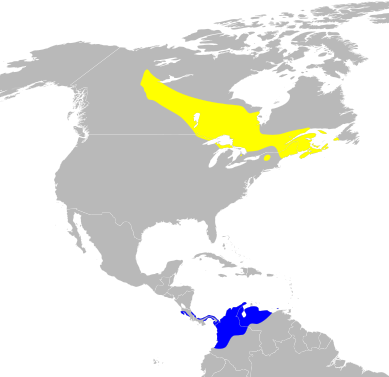
Range