Bird App
Bird of the day
Waved albatross
Phoebastria irrorata
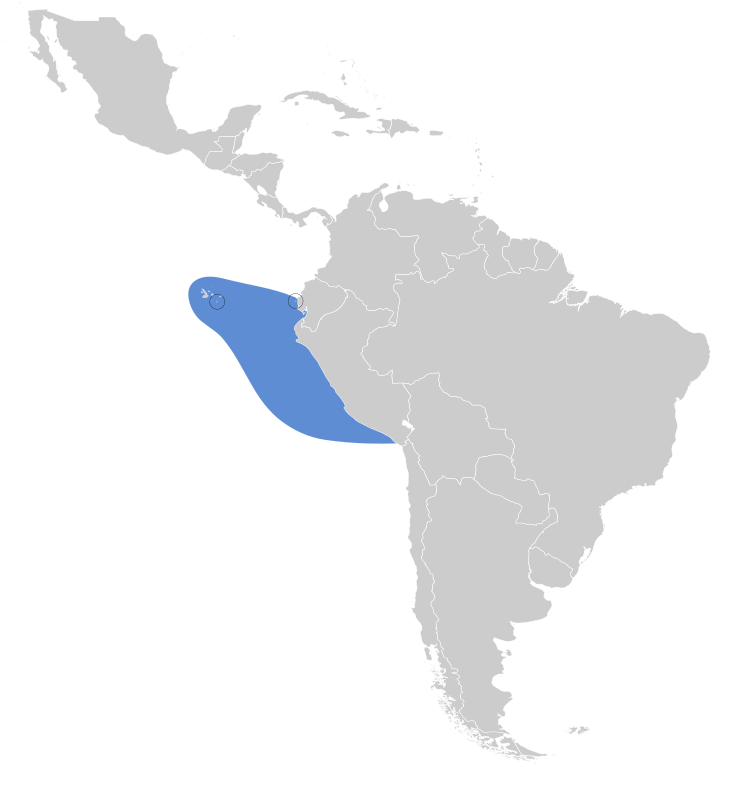
The waved albatross (Phoebastria irrorata), also known as Galapagos albatross, is one of three species of the family Diomedeidae that occur in the tropics. When they forage, they follow a straight path to a single site off the coast of Peru, about 1,000 km (620 mi) to the east. During the non-breeding season, these birds reside primarily on the Ecuadorian and Peruvian coasts.
These are medium-sized albatrosses, measuring 80 to 90 cm (31 to 35 in) in length with a wingspan of 220–250 cm (7.2–8.2 ft). They range between 2.7 and 4.0 kg (6.0 and 8.8 lb) in mass, with males averaging significantly heavier than females. They are distinctive for their yellowish-cream neck and head, which contrasts with their mostly brownish bodies. Even more distinctive is the very long, bright yellow bill, which looks disproportionately large in comparison to the relatively small head and long, slender neck. They also have chestnut brown upper parts and underparts, except for the breast, with fine barring, a little coarser on the rump. They have brown upper-wings, back, and tail, along with a whitish breast and underwings. Their axillaries are brown. Finally they have bluish feet. Juveniles are similar to adults except for more white on their head. Chicks have brown fluffy feathers. The lifespan of this species may reach 40 to 45 years.
Aliases
Phoebastria irrorata
Range