 Bird App
Bird of the day
Piping plover
Charadrius melodus
The piping plover (Charadrius melodus) is a small, sand-colored shorebird that nests and feeds along coastal sand and gravel beaches in North America. The adult has yellow-orange-red legs, a black band across the forehead from eye to eye, and a black stripe running along the breast line. This chest band is usually thicker in males during the breeding season, and it is the only reliable way to tell the sexes apart. The bird is difficult to see when it is standing still, as it blends well with open, sandy beach habitats. It typically runs in short, quick spurts and then stops.
There are two subspecies of piping plovers: the eastern population is known as Charadrius melodus melodus and the mid-west population is known as C. m. circumcinctus. The bird's name is derived from its plaintive bell-like whistles which are often heard before the bird is visible.
In 1986, the U.S. Fish & Wildlife Service listed the Great Lakes population as endangered and the Northern Great Plains and Atlantic populations as threatened. Intensive conservation efforts have yielded slow population growth, but only some populations have met the recovery goals set for them. The growth trend is expected to reverse if conservation efforts were stopped. Total population was estimated to be between 7600 and 8400 individuals in 2020.
Their breeding habitat includes beaches and sand flats on the Atlantic coast, the shores of the Great Lakes, and in the mid-west of Canada and the United States. They nest on sandy or gravel beaches or shoals. These shorebirds forage for food on beaches, usually by sight, moving across the beaches in short bursts. Generally, piping plovers will forage for food around the high tide wrack zone and along the water's edge. They eat mainly insects, marine worms, and crustaceans.
The piping plover is a stout bird with a large rounded head, a short thick neck, and a stubby bill. It is a sand-colored, dull gray/khaki, sparrow-sized shorebird. The adult has yellow-orange legs, the male has a prominent black band across the forehead from eye to eye, and a black ring around the neck during the breeding season. The band on the female's brow is much fainter. During nonbreeding season, the black bands become less pronounced. Its bill is orange with a black tip. It ranges from 15–19 cm (5.9–7.5 in) in length, with a wingspan of 35–41 cm (14–16 in) and a mass of 42–64 g (1.5–2.3 oz).
The piping plover's light call is a soft, whistled peep peep given by standing and flying birds. Its frequently heard alarm call is a soft pee-werp, which the second syllable lower pitched.
Aliases
Charadrius melodus
Range
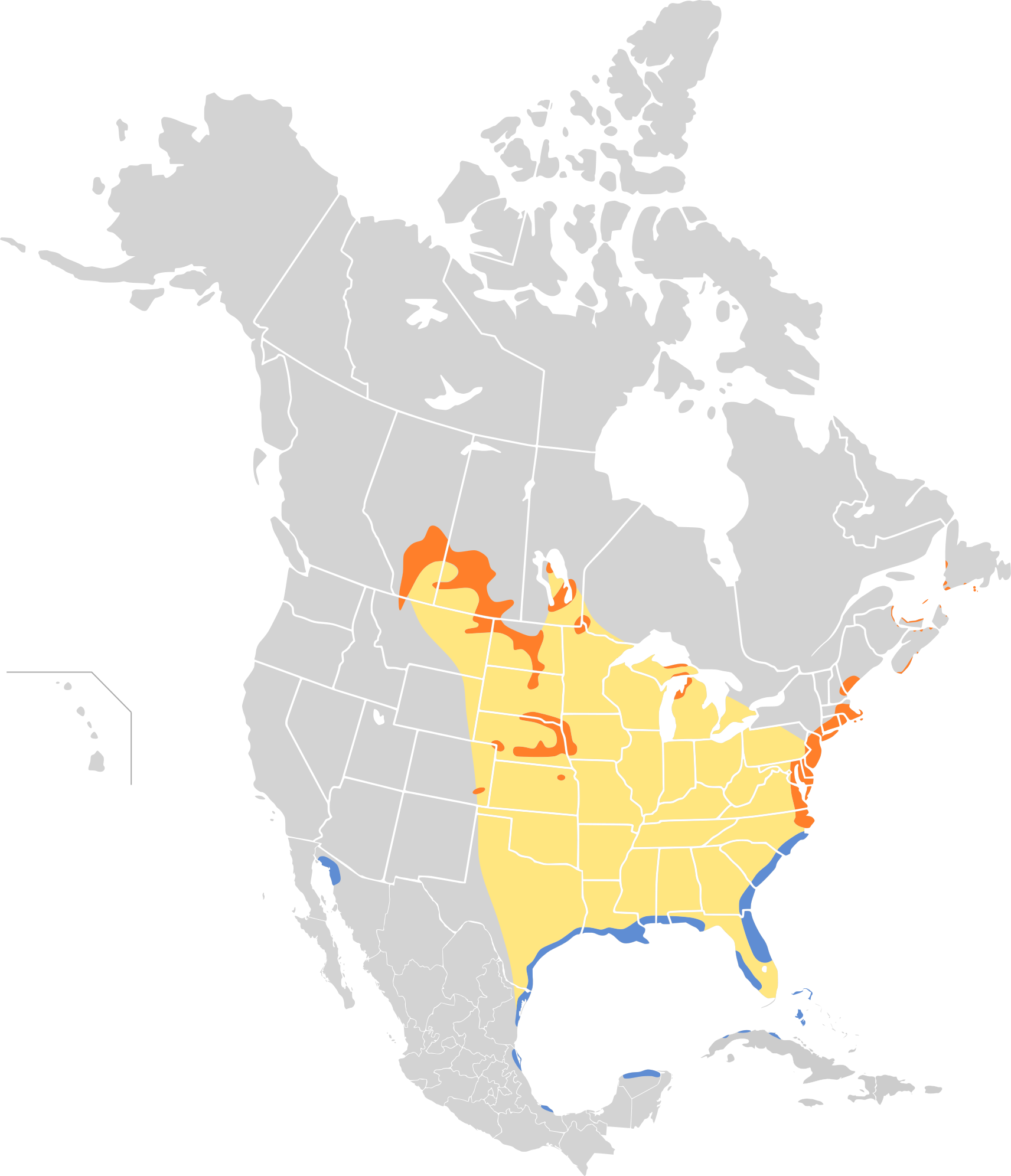
Data retrieved on September 27, 2026 at 4:10 PM