 Bird App
Bird of the day
Great reed warbler
Acrocephalus arundinaceus
The great reed warbler (Acrocephalus arundinaceus) is an insectivorous bird in the family Acrocephalidae. It is a medium-sized passerine bird and the largest of the European warblers. It breeds throughout mainland Europe and the Western Palearctic and migrates to sub-Saharan Africa in the winter. It favours reed beds during the breeding season, while living in reed beds, bush thickets, rice fields, and forest clearings during the winter. It exhibits relatively low sexual dimorphism, and the sexes are similar in appearance. This species mates both polygynously and monogamously.
The thrush-sized warbler is one of the largest species in both its current the family Acrocephalidae, and its former family, the "Sylviidae". It measures 16–21 cm (6.3–8.3 in) in length, 25 to 30 cm (9.8 to 11.8 in) in wingspan and weighs 22 to 38 g (0.78 to 1.34 oz). The adult has unstreaked brown upperparts and dull buffish-white chin and underparts. The forehead is flattened, and the bill is strong and pointed. It looks very much like a giant common reed warbler (Acrocephalus scirpaceus), but with a stronger supercilium. The sexes are identical, as with most old world warblers, but young birds are richer buff below.
The warbler's song is very loud and far-carrying. The song's main phrase is a chattering and croaking carr-carr-cree-cree-cree-jet-jet, to which the whistles and vocal mimicry typical of marsh warblers are added.
Aliases
Great reed-warbler, Acrocephalus arundinaceus
Range
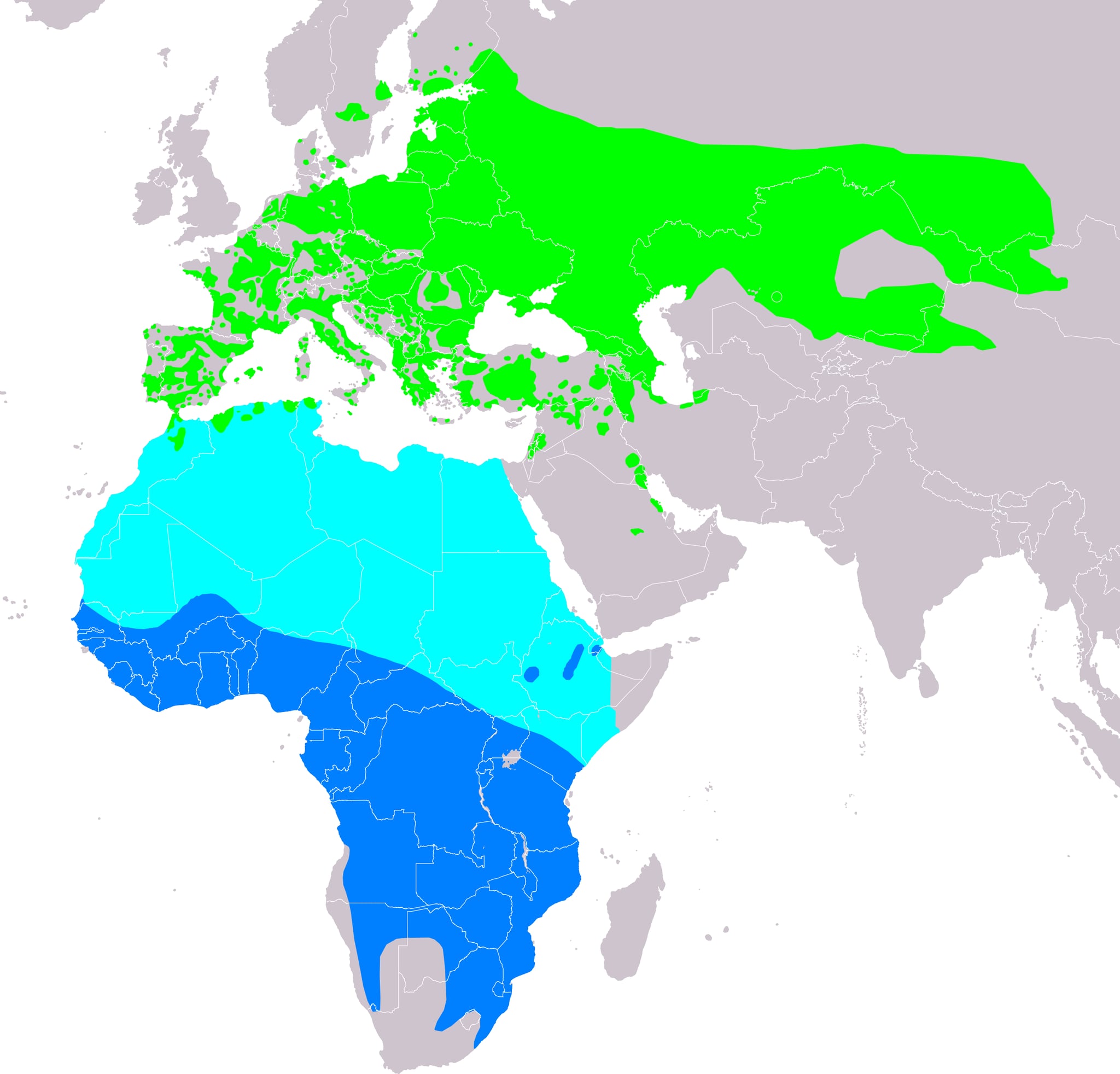
Data retrieved on October 15, 2025 at 6:10 AM