 Bird App
Bird of the day
Banded stilt
Cladorhynchus leucocephalus
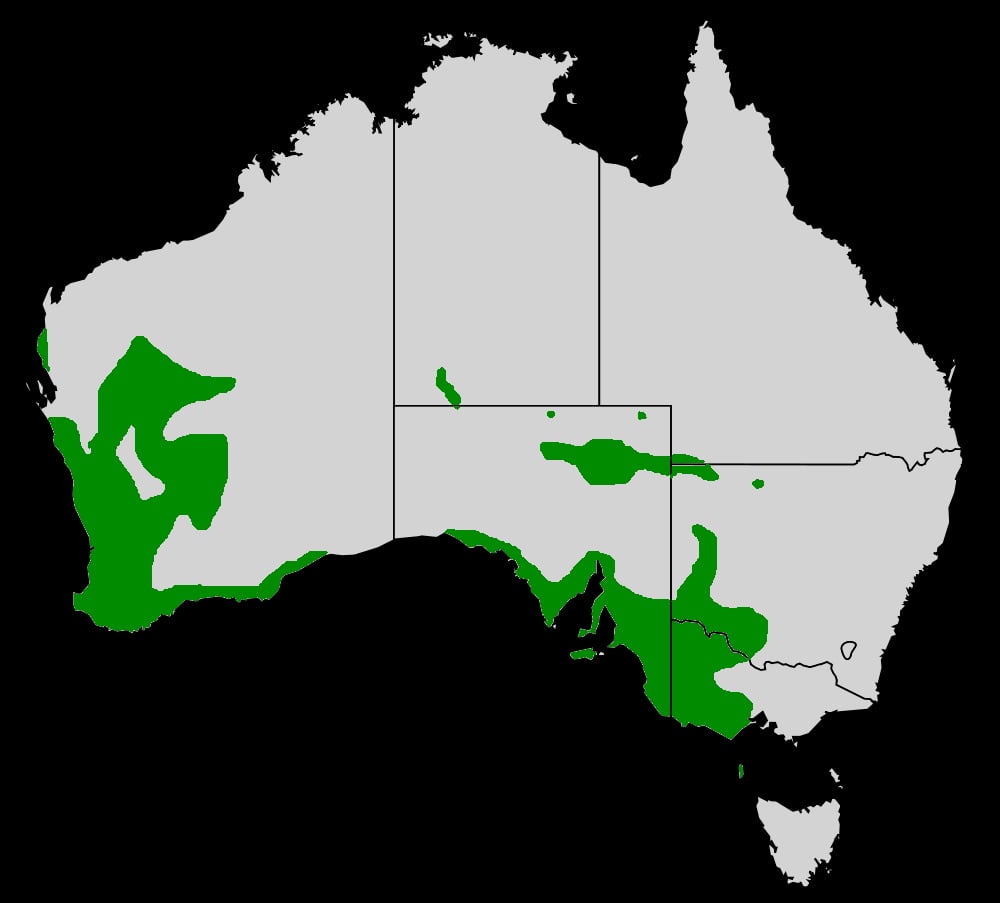
The banded stilt (Cladorhynchus leucocephalus) is a wader of the stilt and avocet family, Recurvirostridae, native to Australia. It belongs to the monotypic genus Cladorhynchus. It gets its name from the red-brown breast band found on breeding adults, though this is mottled or entirely absent in non-breeding adults and juveniles. Its remaining plumage is pied and the eyes are dark brown. Nestling banded stilts have white down, unlike any other species of wader.
Breeding is triggered by the filling of inland salt lakes by rainfall, creating large shallow lakes rich in tiny shrimp on which the birds feed. A nomadic species, banded stilts migrate to these lakes in large numbers and assemble in large breeding colonies. The female lays three to four brown- or black-splotched whitish eggs on a scrape. If conditions are favourable, a second brood might be laid, though if the lakes dry up prematurely the breeding colonies may be abandoned.
The banded stilt is considered to be a species of least concern by the International Union for Conservation of Nature (IUCN). Under the South Australian National Parks and Wildlife Act 1972, however, this bird is considered to be Vulnerable. This is due to the predation of it by silver gulls, which are considered to be a serious threat. Black falcons and wedge-tailed eagles are also predators, taking the banded stilt and its young.
The banded stilt is 35–43 cm (14–17 in) long and weighs 220–260 g (7.8–9.2 oz), with a wingspan of 55–68 cm (22–27 in). Adults in breeding plumage are predominantly white with black wings and a broad well-demarcated u-shaped chestnut band across the breast. The central part of the base of the upper tail is tinted a pale grey-brown. The slender bill is black, relatively straight, and twice as long as the head. The irises are dark brown and the legs and feet are a dark red-pink. The wings are long and slim and have eleven primary flight feathers, with the tenth being the longest. In flight, the wings are mostly black when seen from above, but have a white trailing edge from the tips of the inner primaries. From underneath, the wings are predominantly white with dark tips. White feathers on the head and neck have pale grey bases, which are normally hidden. Non-breeding plumage is similar, but the chest band is less distinct and often diluted to an ashy brown or mottled with white. The legs are a paler- or orange-pink. There is no difference in plumage between the sexes, nor has any geographic variation been recorded.
Juvenile birds resemble adults but have a greyish forehead and lores, duller black wings, and lack the characteristic breast band. Adult plumage is attained in the second year. Their legs and feet are grey, becoming more blotched with pink until adulthood. Nestling banded stilts are covered in white down.
A distinctive bird, the banded stilt is hard to confuse with any other species; the white-headed stilt lacks the breast band, and the red-necked avocet has a chestnut head and neck, and a distinctly upcurved bill.
Adults make a barking call that has been written as cow or chowk, sometimes with two syllables as chowk-uk or chuk-uk. Birds also chatter softly and tunefully while nesting.
Aliases
Cladorhynchus leucocephalus
Range
Data retrieved on September 27, 2026 at 5:46 PM