 Bird App
Bird of the day
Ground tit
Pseudopodoces humilis
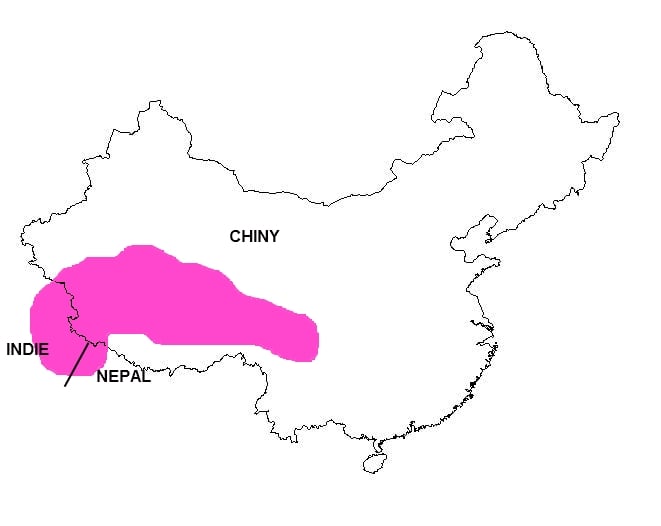
The ground tit, Tibetan ground-tit or Hume's ground-tit (Pseudopodoces humilis) is a bird of the Tibetan plateau north of the Himalayas. The peculiar appearance confused ornithologists in the past who called it as Hume's groundpecker and still later as Hume's ground jay or Tibetan ground jay assuming it belonged to the family Corvidae that includes the crows and jays. Although morphologically confusing, the species has since been identified using molecular sequence comparisons as being a member of the tit family (Paridae) and is the only species in the genus Pseudopodoces. It is found in the Tibetan Plateau of China, India, Nepal & Bhutan.
Pseudopodoces is somewhat similar in appearance to the unrelated ground jays (Podoces), but much smaller – about the size of a house sparrow (Passer domesticus) – and lacks any conspicuous markings. More distinctly however, it resembles a wheatear (Oenanthe) in habitus, but lacks black feathers and has a strong and slightly downcurved bill resembling that of a chough (Pyrrhocorax) in shape (though not in colour). Its soft, lax body plumage is extremely cryptic in its natural habitat. The underside is a greyish-fawn in colour, with a tawny hue. The upper parts are mostly a darker fawn-brown, with the central rectrices and the primary remiges a little darker still; the head is coloured like the underside, with a darker cap and light nape patch, fairly reminiscent of some tits and chickadees, especially those from the genera Parus sensu stricto and Periparus. The bill, legs and feet are black. Males and females look alike.
The voice is described as a plaintive whistling, cheep-cheep-cheep-cheep and it also has a two syllable finch-like call.
Aliases
Pseudopodoces humilis
Range
Data retrieved on October 15, 2025 at 5:35 AM