 Bird App
Bird of the day
Flightless cormorant
Nannopterum harrisi
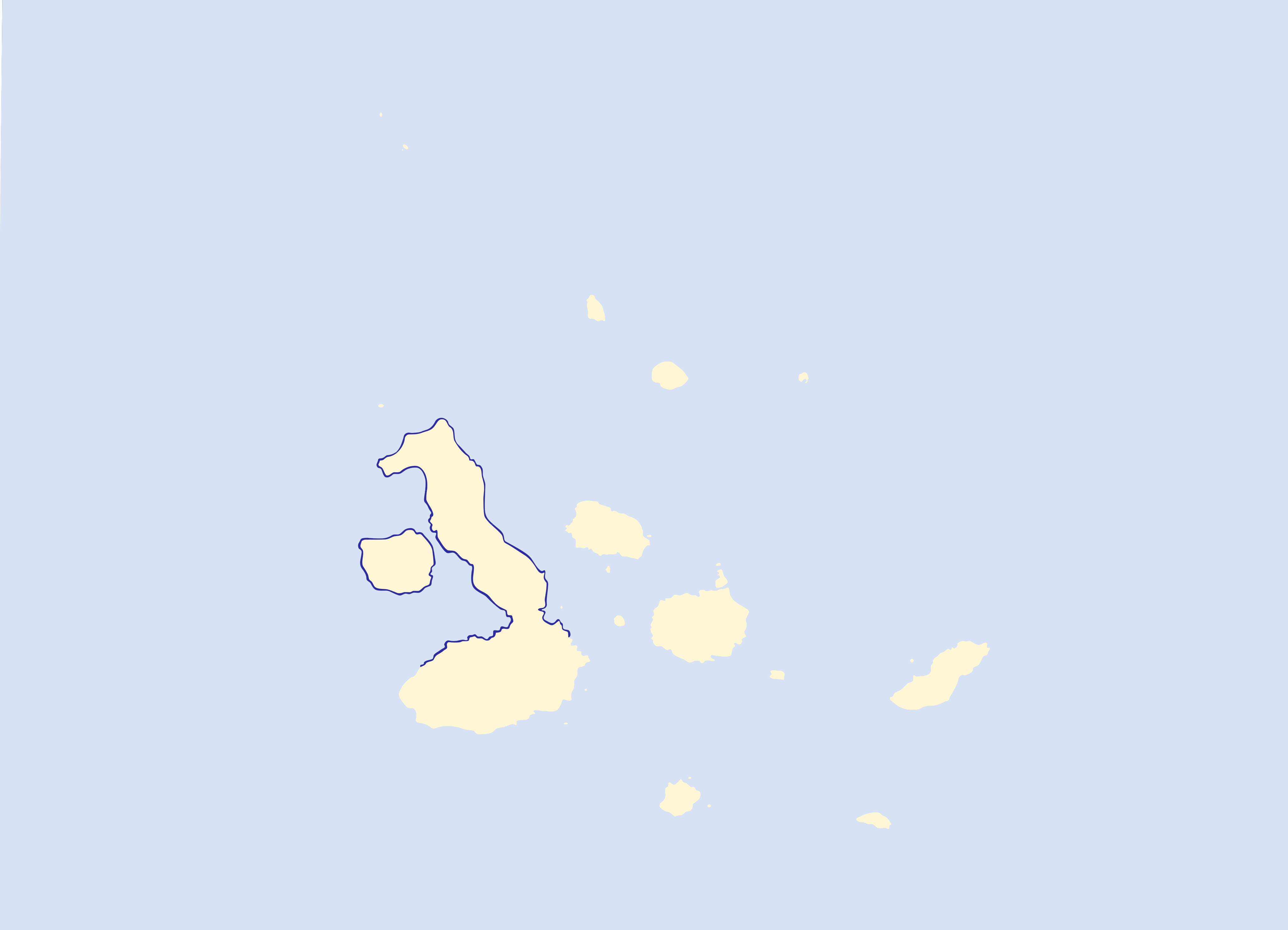
The flightless cormorant (Nannopterum harrisi), also known as the Galápagos cormorant, is a cormorant endemic to the Galápagos Islands, and an example of the highly unusual fauna there. It is unique in that it is the only known cormorant that has lost the ability to fly. It was placed in its own genus, Nannopterum, but then was later placed with most of the other cormorants in the genus Phalacrocorax. A 2014 study supported reclassifying it and two other American cormorant species back into Nannopterum. The IOU followed this classification in 2021.
The flightless cormorant is the largest extant member of its family, 89–100 cm (35–39.5 in) in length and weighing 2.5–5.0 kg (5.5–11.0 lb), and its wings are about one-third the size that would be required for a bird of its proportions to fly. The keel on the breastbone, where birds attach the large muscles needed for flight, is also significantly reduced.
Like all cormorants, this bird has webbed feet and sturdy legs that propel it through the water as it seeks its prey of fish, small octopuses, and other little marine creatures. The species feeds near the sea floor and no more than 200 metres offshore. The flightless cormorants look slightly like a duck, except for their short, stubby wings. The upperparts are blackish, and the underparts are brown. The long beak is hooked at the tip and the eye is turquoise. Like all members of the cormorant family, all four toes are joined by webbed skin. Males and females are similar in appearance, although males are larger and ca. 35% heavier. Juveniles generally resemble adults but differ in that they are glossy black in colour with a dark eye. Adults produce low growling vocalizations.
Like other cormorants, this bird's feathers are not waterproof, and they spend time after each dive drying their small wings in the sunlight. Their flight and contour feathers are much like those of other cormorants, but their body feathers are much thicker, softer, denser, and more hair-like. They produce very little oil from their preen gland; it is the air trapped in the dense plumage that prevents them from becoming waterlogged.
Aliases
Nannopterum harrisi, Galapagos cormorant
Range
Data retrieved on October 15, 2025 at 5:28 AM