 Bird App
Bird of the day
Horned curassow
Pauxi unicornis
The horned curassow (Pauxi unicornis), or southern helmeted curassow, is a species of bird in the family Cracidae found in humid tropical and subtropical forests. It was first described by James Bond and Rodolphe Meyer de Schauensee in 1939 from a specimen collected in Bolivia, and further birds that were described from Peru in 1971 were thought to be a new subspecies. However, the taxonomical position (as subspecies or independent species) of the birds found in Peru in 1971 is unclear. The horned curassow as originally described is endemic to Bolivia. It is a large, predominantly black bird with a distinctive casque on its forehead. It is an uncommon bird with a limited range and is suffering from habitat loss, and the International Union for Conservation of Nature has rated its conservation status as being "critically endangered".
The horned curassow is among the largest cracid species. It measures 85 to 95 cm (33 to 37 in) in length. Body mass in large males is up to 3.7 to 3.9 kg (8.2 to 8.6 lb) and only the great curassow is heavier amongst the cracids, although the black curassow and the closely related helmeted curassow are around the same length. Among standard measurements, the wing chord is 38.1 to 40.2 cm (15.0 to 15.8 in), the tail is 31 to 34.8 cm (12.2 to 13.7 in) and the tarsus is 10 to 10.8 cm (3.9 to 4.3 in). It has a distinctive horn or casque on the forehead which projects for over 6 cm (2.4 in). The plumage is generally black, but lacks a blue sheen in primary feathers, and has a white belly, thigh tufts and under-tail coverts. The tail also has white tips.
Aliases
Pauxi unicornis, southern helmeted curassow
Range
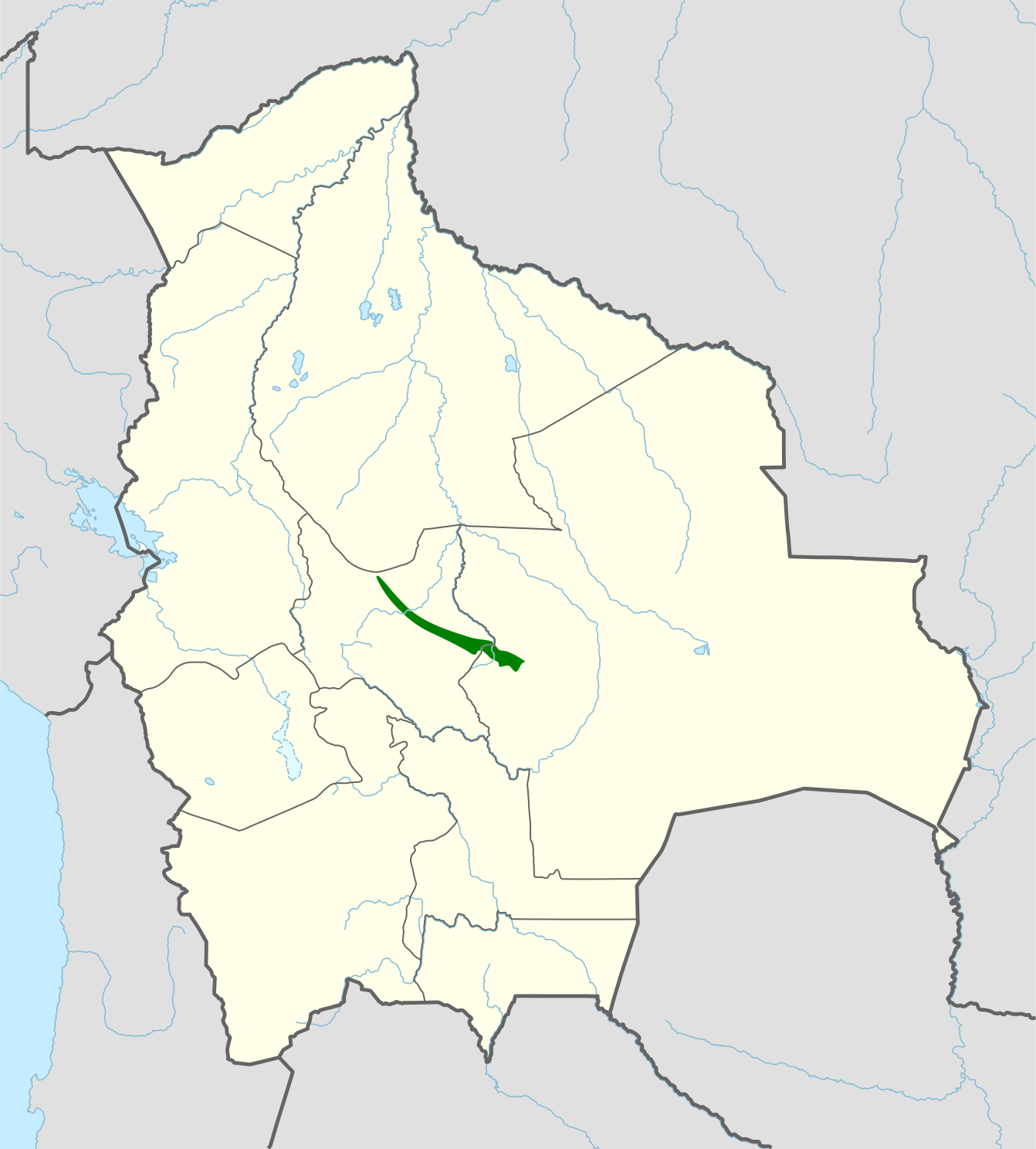
Data retrieved on October 15, 2025 at 5:20 AM