Bird of the day
Mountain plover
Charadrius montanus
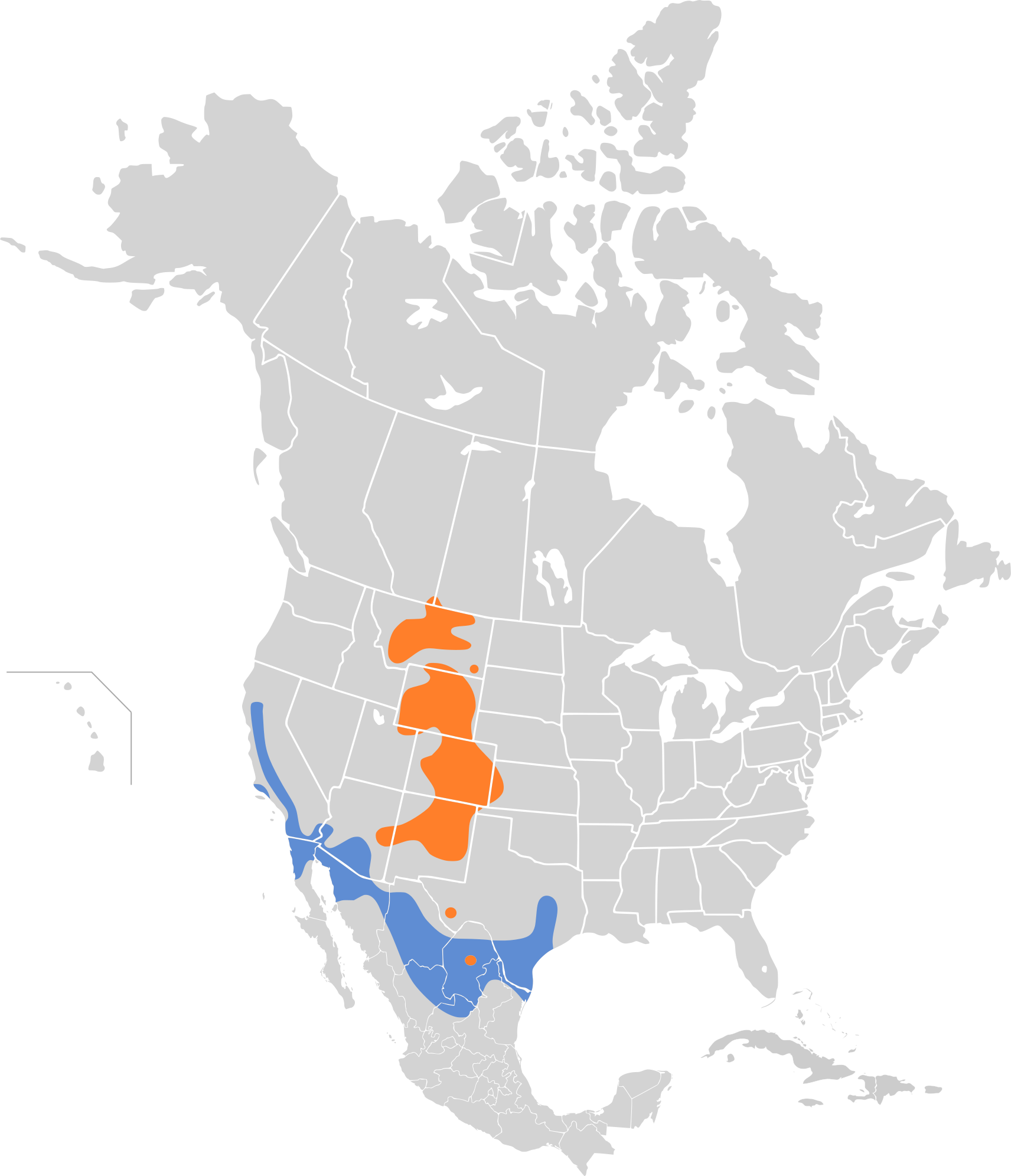
The mountain plover (Anarhynchus montanus) is a medium-sized ground bird in the plover family (Charadriidae). It is misnamed, as it lives on level land. Unlike most plovers, it is usually not found near bodies of water or even on wet soil; it prefers dry habitat with short grass (usually due to grazing) and bare ground. Its height is in the range of 5–9 inches (12.7–22.8 cm), and length in the range of 8–10 inches (20.3–25.4 cm); and it weighs around 102 grams.
The word plover came from a Latin word pluvia which means "rain". In medieval England some migratory birds became known as plovers because they returned to their breeding grounds each spring with rain. In 1832 American naturalist John Kirk Townsend spotted a species of unknown bird near the Rocky Mountains, and assumed that all these birds live in mountains. The plover comes back each spring to its breeding grounds, and so the wrong name mountain plover was given to the species.
The mountain plover is 8 to 9.5 inches (20 to 24 centimetres) long and weighs about 3.7 ounces (100 grams). Its wingspread is 17.5 to 19.5 inches (44 to 50 centimetres). The mountain plover's call consists of a low, variable whistle. Both sexes are of the same size. In appearance it is typical of Charadrius plovers, except that unlike most, it has no band across the breast. The upperparts are sandy brown and the underparts and face are whitish. There are black feathers on the forecrown and a black stripe from each eye to the bill (the stripe is brown and may be indistinct in winter); otherwise the plumage is plain. The mountain plover is much quieter than its relative the killdeer. Its calls are variable, often low-pitched trilled or gurgling whistles. In courtship it makes a sound much like a far-off cow mooing.
Aliases
Charadrius montanus
Range